
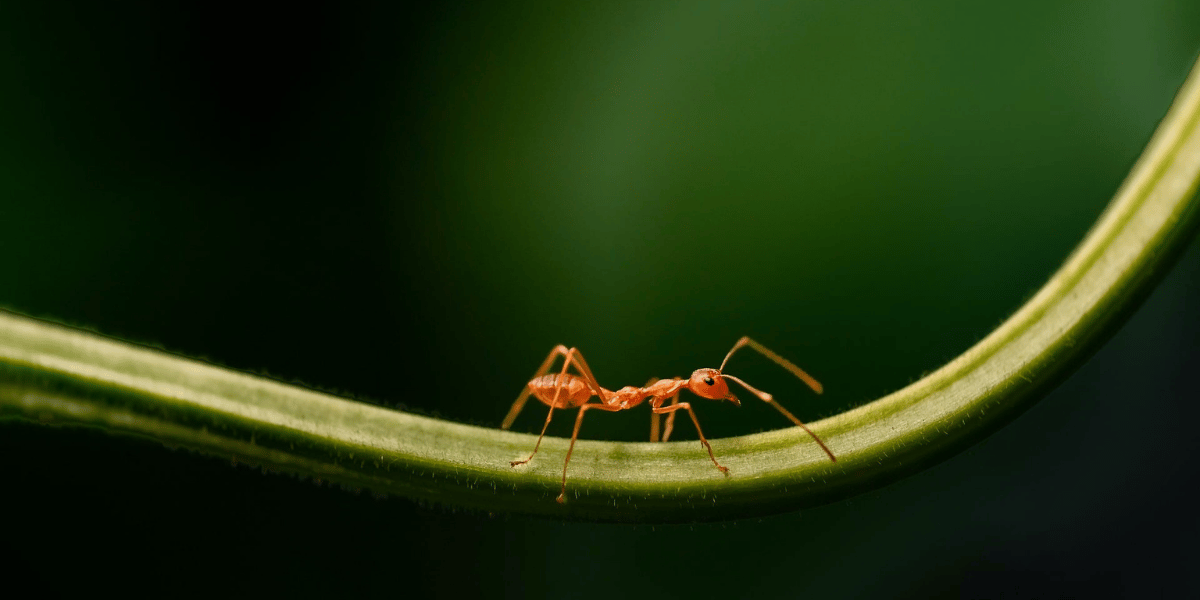
By Cindy Berdine, West Virginia Highlands Conservancy Member
Do you ever wonder what happens to ants when it rains? What do we really know about ants, anyway?
Recently, while camping, the campsite was invaded by ants. Little, teeny-tiny ones, and they were everywhere! Then it poured down rain. I am talking about torrential rain. Then I started thinking: Do they get flooded? Where do they go? Do they drown? So here we are. Turns out, ants are pretty cool creatures. Spoiler alert: They do not die or drown when it rains, either.
Ants are insects, and they belong to the family Formicidae within the order Hymenoptera, which also includes bees, wasps, and sawflies. They are found on all continents except Antarctica. The study of ants is called myrmecology, which is a specialized branch of entomology.
During rain, ants breathe through small openings called spiracles and can close them and hold their breath for up to 24 hours. Ant nests are deep and have drainage systems. They have waterproof exoskeletons and survive by closing their respiratory openings. Their colonies are designed with special drainage tunnels. Ants are sensitive to environmental changes such as humidity, temperature and air pressure. When these environmental changes take place, ants will move the brood and queen to higher ground before a storm. They may even move them into your home. Ants create water traps, which are rooms designed to collect excess water, so the nest remains dry. Some species even create ant rafts, literally linking their bodies together to form a float. They can survive for weeks this way until they reach dry land.
The deepest ant hill known was made by leaf-cutter ants and reaches a depth of 26 feet.
The most common types of ants found in West Virginia are pavement ants (Tetramorium immigrans), carpenter ants (Camponotus pennsylvanicus) and odorous house ants (Tapinoma sessile).
Odorous house ants smell like rotting coconuts when crushed. When an ant dies from being crushed or squished, it sends out alarm pheromones, sending distress signals to the rest of the colony. This chemical acts as a beacon and calls in the colony’s own SWAT team to investigate the danger and retrieve the dead ant.
Before your reaction is to destroy an ant, remember that they play a vital role in our ecosystem. They contribute to soil health. They* control pest populations, including aphids, caterpillars and termites. They aerate and enrich the soil, excavate the ground, break up compacted earth and facilitate the movement of nutrients and water to plant roots.
They promote decomposition by removing dead insects and decomposing plant and animal matter from the environment. They encourage plant growth and serve as valuable biological indicators of climate change.