FOR IMMEDIATE RELEASE
February 5, 2026
CONTACT:
Amy Margolies, Tucker United, 202-368-5025
Cris Parque, Tucker United, 917-386-8483
Jim Kotcon, WV Sierra Club, jkotcon@gmail.com, 304-594-3322
Olivia Miller, West Virginia Highlands Conservancy, olivia.miller@wvhighlands.org, 304-704-2997
CHARLESTON, W.Va. — The West Virginia Air Quality Board (AQB) denied the appeal of three citizen groups who demanded that the West Virginia Department of Environmental Protection (WVDEP) revoke and reclassify an air quality permit for the proposed Ridgeline power plant and data center in Tucker County. Tucker United, the West Virginia Highlands Conservancy, and the Sierra Club filed a notice of appeal with the West Virginia State Air Quality Board on Sept. 12, challenging WVDEP’s approval of the permit. The groups are represented by Mike Becher from Appalachian Mountain Advocates.
The decision issued Thursday, Feb. 5 followed a hearing held in December at the WVDEP headquarters in Charleston. The AQB overruled the citizen groups’ objections and accepted the position of WVDEP that the facility was a minor source, that information was allowed to be kept from the public, and that emissions were estimated properly. The Board did agree that additional monitoring should be required.
The original appeal raised 17 specific objections to the issuance of the permit, of which 15 were considered. These objections focused primarily on the WVDEP’s misclassification of the facility as a synthetic minor source of emissions instead of a major source, and the redaction of critical data to calculate air pollutant emissions. In a prior hearing, the AQB granted the citizen groups’ request for their attorney and expert witness to have access to the unredacted permit to allow for an independent analysis of the project’s anticipated impacts. Yet, the AQB failed to act on the evidence that the facility’s emissions limits are incorrectly classified as a synthetic minor source of pollutants.
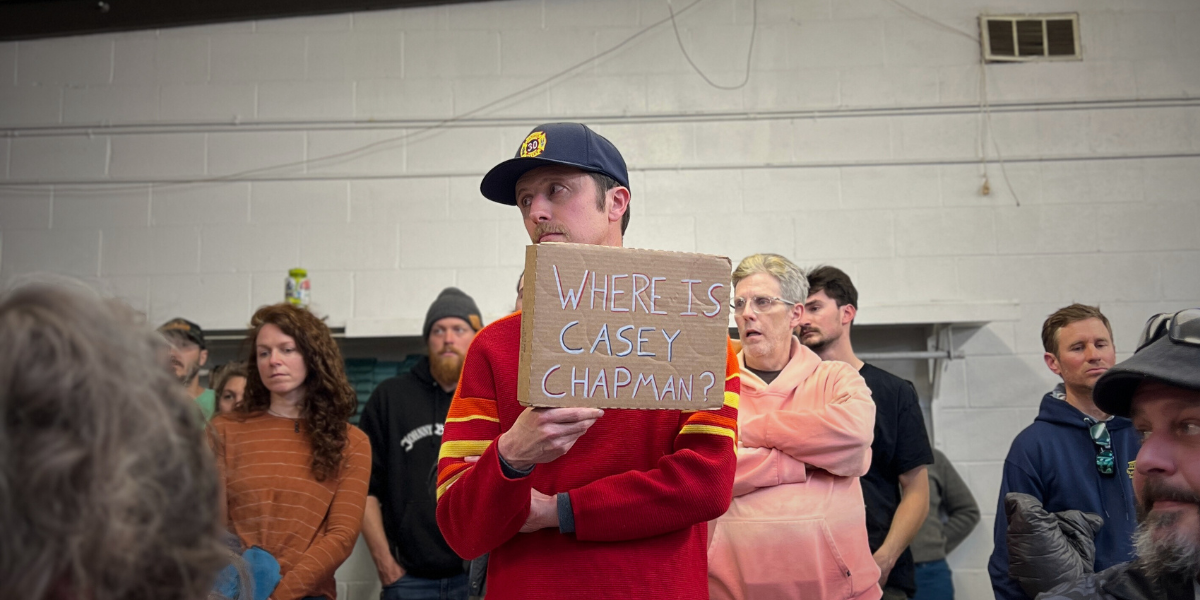
“We are extremely disappointed in the Air Quality Board’s decision to uphold the air permit for the Ridgeline facility, despite significant concerns from community members,” said Amy Margolies, a member of Tucker United. “The board failed to protect the health and well-being of West Virginians, opting instead to favor the interests of out-of-state developers.”
“Fundamental Data is proposing to build one of the largest power plants in West Virginia, but wants its air pollution to be regulated as a minor source”, said Jim Kotcon, Conservation Chair for the West Virginia Chapter of Sierra Club. “It defies common sense to claim such a large source of pollution is a ‘minor source,’ yet the WVDEP and the Air Quality Board accepted that decision. Locating such a facility next to Canaan Valley and Dolly Sods is simply not appropriate.”
“We are, of course, disappointed by the Air Quality Board’s ruling this week, but fully expected the subordinates of the governor to rule in favor of a data center developer, and not the people of West Virginia,” said Olivia Miller, interim executive director of the West Virginia Highlands Conservancy.
Miller continued, “We are up against a system that clearly prioritizes corporations over people and public health at nearly every turn. The decision stated Fundamental Data pursued the synthetic minor permit path to avoid the ‘more costly and onerous’ requirements that come with major-source permitting. The Conservancy is no stranger to long battles, and we are ready to keep fighting to protect the people, land, air, and water of the Highlands.”
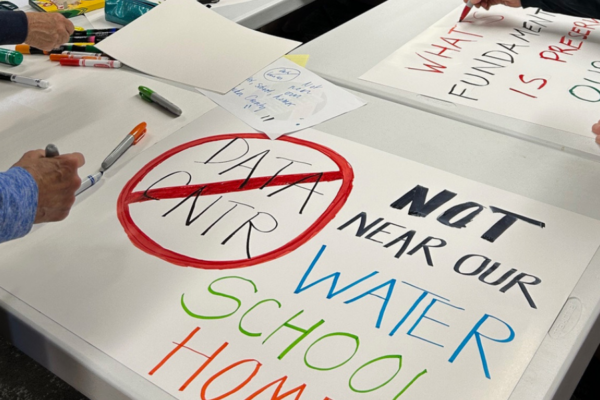
The groups claim the Ridgeline project has been shrouded in secrecy, with corporate privacy rights prioritized over protecting the safety of West Virginia citizens and the environment. We encourage citizens to review the transcripts for themselves regarding the safety of the Ridgeline project and decide whether they want a project like this that emits nitrogen oxides, formaldehyde, and carbon monoxide in their backyard.
“Although the Air Quality Board did not vote to reclassify the project as a major source of pollutants, which would have triggered a more transparent process involving air quality modeling and environmental impact assessments, Tucker United will continue to fight this proposal,” said Cris Parque, from Tucker United. “We will never stop advocating for the safety and well-being of our community, and ask that everyone pitch in. We stand united in opposition to any project that hurts our communities, and we need every Mountaineer’s help, whether through writing letters to lawmakers, donating, or sharing on social media. Your voice matters in the fight against unchecked data center buildout across the state.”