By Jordan Howes, West Virginia Highlands Conservancy
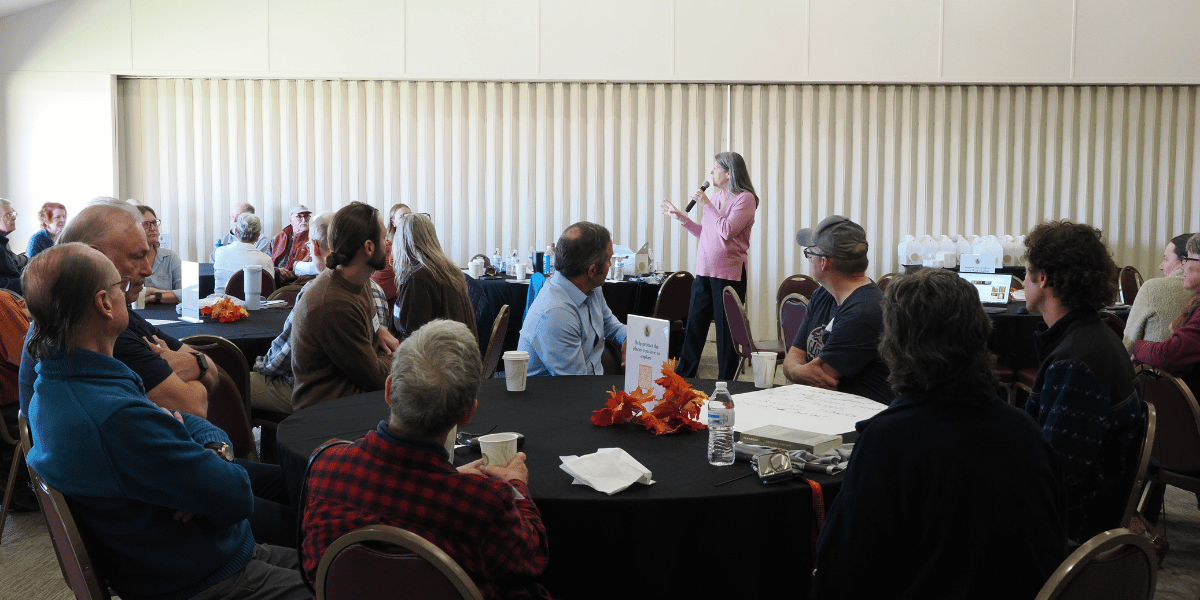
More than 60 people gathered at Canaan Valley Resort State Park on Oct. 23–24 for the West Virginia Highlands Conservancy’s 2026 Fall Review, “Finding Our Place in the Work Ahead.” With wonderful weather, well-attended outdoor activities and opportunities to connect, learn and build advocacy skills, the weekend brought together longtime conservationists and newer members of the WVHC community around a shared commitment to protecting West Virginia’s mountains, waters and communities.
The weekend began Friday with opportunities to explore the Highlands and reconnect with fellow conservationists. Attendees enjoyed a hike in Dolly Sods led by the Dolly Sods Wilderness Stewards before gathering for an informal welcome party at Big Timber Brewing in Davis. The gathering offered a relaxed opportunity to meet new people, catch up with friends and begin the weekend together.
Saturday’s beautiful weather made getting outside even more enjoyable. Participants had several opportunities to experience the natural places at the heart of the Conservancy’s work, including a guided tour of the Abe’s Run wetland and a strenuous four-mile hike through Canaan Valley State Park. Feedback from attendees reflected how much these outings were enjoyed, offering both a chance to learn and an opportunity to appreciate the landscapes we work to protect.
The weekend also provided an inside look at the challenges facing West Virginia and the work the Conservancy and its partners are doing to address them. Extractive Industries Committee Chair Andrew Young discussed the committee’s work and the impacts of mining. Luanne McGovern shared an update on the fight over data center development in the Highlands and across the state, while Dave Johnston highlighted the work of the Dolly Sods Wilderness Stewards.
Following the Wilderness Stewards presentation, participants watched the Conservancy’s documentary about Helen McGinnis, whose leadership helped secure lasting protections for Dolly Sods and inspired generations of conservationists.
A central theme of this year’s Fall Review was that there is no single way to create meaningful change. As communities across the Highlands confront threats ranging from data centers and transmission lines to fossil fuel development and environmental deregulation, the work ahead can feel daunting. But the weekend’s keynote speaker, Eileen Flanagan, helped participants consider how different skills, approaches and perspectives can come together to build stronger movements.
Flanagan, a Quaker author, speaker, activist and nationally recognized nonviolence trainer, brought decades of experience in climate campaigns and movement building to the gathering. Her Saturday afternoon training, “The Four Roles of Social Change,” invited participants to think about the different roles people take on in advocacy and how those roles can work together.
Rather than simply presenting the four roles, Flanagan asked participants to divide themselves according to where they saw themselves in the movement: rebels, helpers, organizers and advocates. The groups then considered their approaches to social change, followed by conversations and collaboration about how to organize effectively. Participants had an opportunity to recognize their own strengths while learning to appreciate the contributions of people who approach advocacy differently.
The exercise reinforced an important point: movements need more than one kind of person or strategy. Rebels challenge the status quo, helpers provide support, organizers bring people together and advocates work to influence systems and decision-makers. Each role contributes something important, and effective movements make room for all of them. The training was engaging and inclusive, with everyone finding a way to participate and contribute to the discussion.
Flanagan continued these themes in her Saturday evening keynote, drawing on her experiences as a campaign leader and movement trainer to explore how people can build connections, sustain movements and work together through difficult struggles. Her latest book, Common Ground: How the Crisis of the Earth Is Saving Us from Our Illusion of Separation, explores the connections between ecological challenges and our relationships with one another and the living world. Her message offered an encouraging perspective for those working to protect West Virginia’s natural resources: meaningful change is possible when people recognize their shared interests and find ways to work together.
Saturday evening also brought the WVHC community together for a reception, silent auction, fundraising dinner and celebration of the Conservancy’s work. The gathering provided another opportunity to strengthen relationships and support the organization’s ongoing conservation efforts. Funds raised through the event help WVHC continue protecting West Virginia’s mountains, waters and communities.
More than 60 attendees, beautiful weather, enjoyable outings and thoughtful conversations made this year’s gathering a memorable weekend. But perhaps the most important takeaway was the reminder that everyone has a place in the work ahead.
After more than six decades of conservation work, the West Virginia Highlands Conservancy knows that protecting the places we love takes many people contributing in many different ways. Whether challenging harmful development, supporting community efforts, organizing neighbors, sharing information or advocating for stronger protections, every role matters.
Thank you to everyone who attended, presented, led an outing, volunteered or helped make the 2026 Fall Review possible. We are grateful for this community and look forward to continuing the work together. We hope to see you at next year’s Fall Review on October 29-31, 2027, at Blackwater Falls State Park.