By C.A. Holmes, Wardensville Resident and Planning Commissioner
I live in a town defined by its geography. In Wardensville, every conversation about someone’s day is spoken in relation to the land: over the mountain, across the ridge, up the holler, or through the valley. This way of speaking is not unique in West Virginia. It’s the language of a state made up of small rural towns, with a handful of mom and pop shops, a Dollar General, and a few locally owned eateries. Wardensville is a near-perfect example. Home to roughly 200 people, it’s a town where most commute elsewhere for work and where decline has outpaced growth since the 1970s.
Wardensville is not what most would call a destination. Yet it sees a steady stream of visitors—people heading to their weekend cabin getaway, the ski slopes a few counties over, or one of the many state and national parks just a stone’s throw away. We are a pass through town, a conduit for out-of-staters experiencing our wild and wonderful landscape. So why should anyone care if the state wants to make that conduit a little faster? Because what makes West Virginia Almost Heaven, is at risk of being destroyed: our country roads, our culture, and our tight-knit communities.
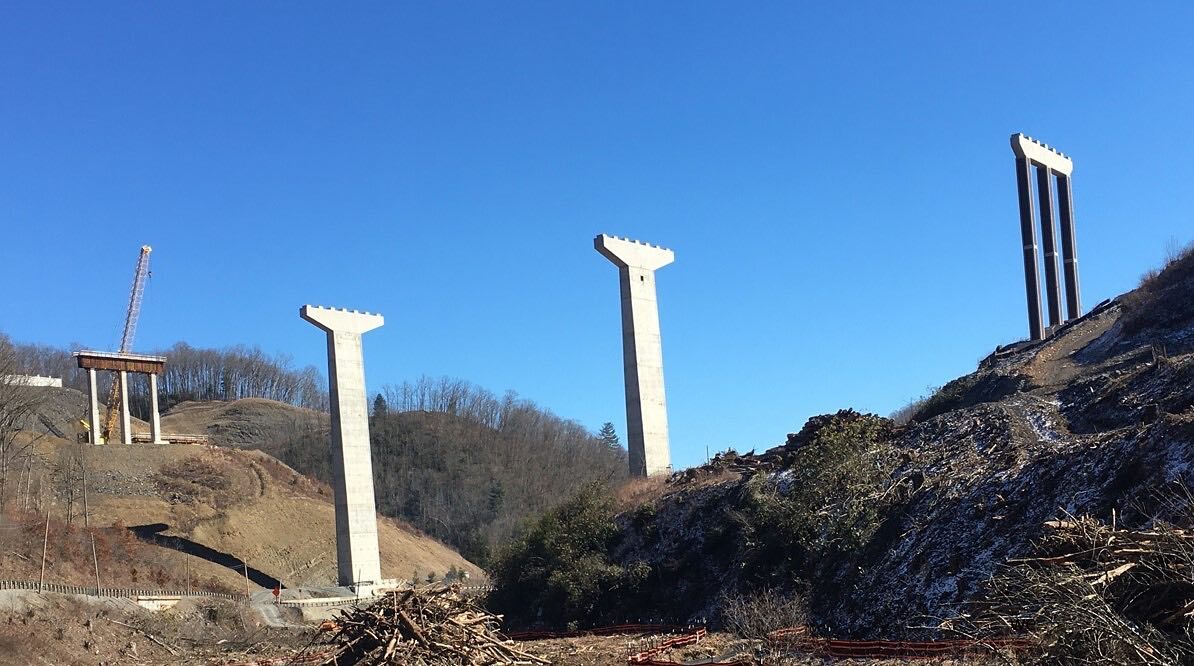
Appalachian Corridor H is, by any honest measure, a multi-billion dollar boondoggle. It has helped once-isolated communities gain better access to jobs, food, and services. That much is not in dispute. But today the giant four-lane highway ends on Wardensville’s door step, just 6.8 miles from the Virginia state line. The state proposes to extend the highway those final miles at a cost of $542 million, nearly $79.7 million per mile.
The justification for the project dates back to the 1960s, when the Appalachian Regional Commission sought to move West Virginia coal east and bring goods into rural communities. In a pre-internet, pre-modern logistics world, that vision made sense. In 2026, it does not. This segment of Corridor H has been planned by West Virginia since 2000, yet it has never appeared in Virginia’s transportation or infrastructure plans. The road would end at the state line with no continuation beyond it—saving less than ten minutes of drive time. What’s most frustrating is not that the state wants to improve transportation, but that it has refused to seriously consider lower-cost, lower-impact alternatives that could improve safety and access without destroying the town in the process.
What it would do, however, is permanently reshape Wardensville. The proposed route would bypass the town entirely while dominating its landscape, burdening a quiet rural community with the constant noise of high-speed traffic echoing off surrounding ridgelines. It would cut through multiple family homes and farms, redefine Anderson Ridge and Great North Mountain, and slice through the George Washington National Forest. And in the process, it would remove the very traffic that keeps local businesses alive.
Kerr’s True Value, a grocery store and gas station, is the first stop for travelers coming in from Virginia and the only gas station with a restroom. It depends on visitors stocking up before heading deeper into the mountains. The Lost River Trading Post, a cafe, general store, and gallery featured in The Washington Post and West Virginia Living Magazine, thrives because it is a delightful, unexpected discovery along a country road. Under the proposed plan, it would become an inconvenient detour two miles from the nearest exit.
The Wardensville Garden Market faces even steeper consequences. This farmers market and bakery is a part of a non-profit that employs Appalachian youth, offering life skills and above-market wages. Travelers make up a majority of its customers. Without them, the organization’s business model would be nearly impossible to sustain. Is all of this worth pushing traffic five minutes down the road? A four lane highway here doesn’t solve a transportation problem. It simply moves the traffic from the valley floor to the top of a mountain, forcing a major lane convergence at the crest of Great North Mountain—directly through the Tuscarora Trail and public forest lands. This is not smart planning; it is stubborn adherence to an outdated map and concept.
Compounding these concerns, the proposed route would be built directly atop Wardensville’s wellhead protection area—the source of the town’s drinking water. Like many small communities across West Virginia, Wardensville has long struggled with aging water infrastructure. The town is now under a permanent boil water notice and has experienced frequent service interruptions during periods of drought. Residents have repeatedly raised concerns about the risk this project poses to an already fragile water supply, yet the state has offered no plan to address existing problems, no contingency plan if construction disrupts the system, and no assurances that the town’s drinking water will be protected.
I am fed up, because West Virginia is not like every other state. We are surrounded by some of the oldest mountains in the world, which the state loves to blow up, by the way. We have had our resources taken from us for the better part of the last century for the benefit of others, while our communities have been asked to accept the consequences. Our culture and simple way of life are romanticized by some, and demeaned by others. I chose to live here for the culture, the scenery, and that same “wild” that our state motto champions.
Now, the state is using aggressive eminent domain tactics to take land from some of Wardensville’s oldest families in order to finish a road that leads nowhere. The project would erase what makes this place unique, leaving behind a small community cloaked in defeat and anger. After generations of being pushed aside by state decisions and outside industries, many residents no longer have the appetite to fight back. This is not how you build pride in a place, it’s how you cultivate defeatism.
All of this is so state officials can declare a decades-old project complete. Some call it a road to nowhere. I call it tone-deaf. It is blind adherence to a 70-year-old plan with little regard for the people it harms and their quality of life. It is a governor claiming there’s no money for new roads while keeping nearly half a billion dollars earmarked for this one. It’s the Appalachian Regional Commission that too often serves corporate convenience over Appalachian communities. And it is exactly how a state continues to shrink.
We don’t want to live in a metropolis or the suburbs. We want to keep our roads country.