
By Go North Alliance
We are blessed with many natural gifts in Tucker County – our beautiful mountains and valleys, the plentiful rivers and streams that flow through them, abundant wetlands, forests, and meadows teeming with animal and plant life. All this, and more, is easily accessible to residents and visitors on land or by water, and we can experience it in relative solitude. Protecting these natural environments from ever-present air and water pollution and development threats is a priority for many individuals and organizations in Tucker County, including the Go North Alliance.
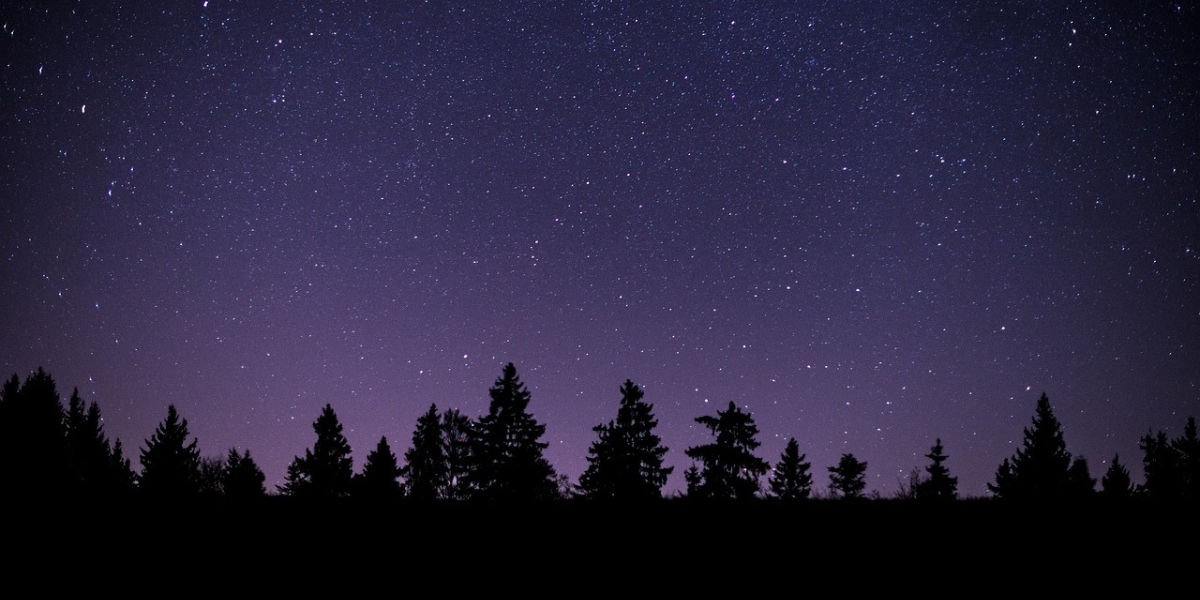
Our abundance of natural gifts extends beyond those within Earth’s atmosphere. Tucker County also boasts some of the clearest, darkest skies in the eastern United States, offering us an incredible view of stars too numerous to count, frequent meteor sightings, and the occasional comet (like now!). It is perhaps this nighttime show of natural wonder that we take most for granted. The stars feel eternal and out of our realm of protection, don’t they?
In one sense, that’s true. It is difficult for any of us to imagine the stars themselves ever disappearing. But the dark skies that enable us to view the magnificence of the heavens have vanished from urban areas around the world due to another insidious form of pollution – light pollution from artificial lights. Here in Tucker County, we can still see the Milky Way stretch across the night sky on clear nights, and even glimpse its haze on cloudy ones. Yet according to the National Oceanic and Atmospheric Administration (NOAA), one-third of the world’s population, and 80% of the population of the US, cannot see the Milky Way from their homes because of artificial light pollution.
Not only is it incredibly relaxing, pleasurable and awe-inspiring to spend time on a dark night gazing at the wonders of the sky, but the natural cycles of light and dark are important to human health. They’re equally crucial for wildlife. Nearly 70% of the world’s animals are nocturnal and depend on darkness for hunting and foraging, reproduction, navigation and protection from predators. There are even some species of plants that only bloom at night, supporting species of nocturnal pollinators like bats and insects.
Protecting our dark skies has become a key focus for Blackwater Falls State Park management and its non-profit support organization, the Blackwater Falls State Park Foundation. Together, they are working toward certification as an International Dark Sky Park and have already inventoried all of the park’s lighting and are actively replacing non-compliant fixtures. Designated dark sky places provide a refuge for humans to enjoy, and an environment to enhance their mental and physical health and sense of wonder. And for local fauna and flora, they are oases where they can live their lives in accordance with the natural rhythms of light and dark with which they evolved.
Unfortunately, there are two large-scale, light-polluting projects that have been proposed near Davis and Thomas. One is the ROPA, the West Virginia Division of Highways’ preferred route for Corridor H from Parsons to Davis. It includes an enormous bridge over the North Fork of the Blackwater River near Douglas. Although DOH has been vague and sometimes self-contradictory about bridge lighting, it will likely include fixtures that would negatively affect our dark skies.
The other is a power plant and data center complex just outside of Davis and Thomas. Facilities like these are known large-scale contributors to light pollution, producing a glow that can be observed for many miles. Both projects may jeopardize the work at Blackwater Falls State Park toward dark skies certification, as well as the ability of Tucker County residents and visitors, and our local plants and animals, to enjoy and thrive under our dark skies.
Many individuals and businesses in Tucker County already recognize the importance of dark skies and have taken simple steps to reduce their contribution to light pollution. Please do your part to help, wherever you call home. Individual mitigation of light pollution is easy: install shielded outdoor fixtures where all light is directed down, and lightbulbs are of fewer lumens and warmer colors (amber vs. white).
Our dark skies are worth saving, for ourselves, for future generations, and for the plants and animals that share this incredible area we all love.