By John McFerrin, West Virginia Highlands Conservancy
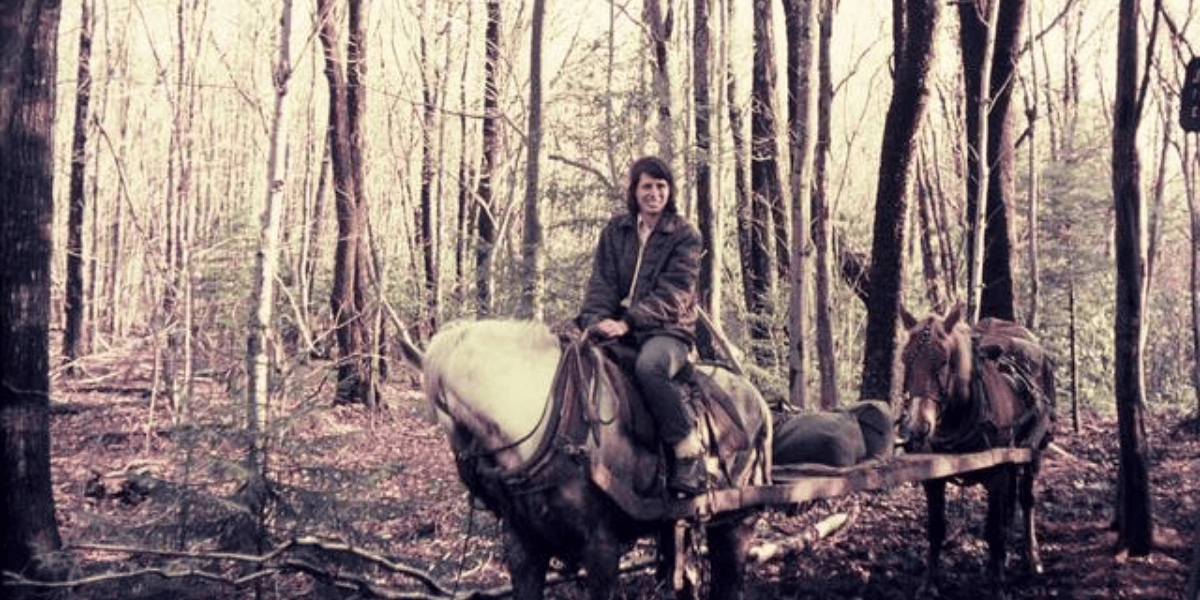
Longtime member, leader, and friend Helen McGinnis is leaving West Virginia and moving to Massachusetts to be closer to her family. While the move is a loss for West Virginia, it does give us an opportunity to remember her and all that she has meant to the West Virginia Highlands Conservancy over the years.
First, a little background. This is how Helen described herself in a 2005 story in The Highlands Voice: “I am a native of California. My mother got me interested in nature. I discovered the mountains and hiking as a Girl Scout, and backpacking as a member of the University of California Hiking Club in the late 1950s. During my twenties, I was happy only with a pack on my back, exploring wilderness areas in the Sierra, Cascade and Rockies. I moved to the Washington, D.C. area in October, 1967.”
Helen’s moves from California to Washington, D.C. and later to Pittsburgh brought her within commuting distance of Dolly Sods and the rest is history. She fell in love with the place and managed to visit most weekends.
Her love of Dolly Sods left her with a question: Why isn’t this place a federally designated Wilderness Area?
Much of the answer lay in what was known as the “purity” doctrine. It was the policy of the United States Forest Service not to consider for Wilderness designation any area which had at one time been timbered, crossed by a road or a railroad, or used in other ways by humans. Even if the influence of mankind had disappeared and the land had resumed its wild condition, its previous condition of “impurity” meant it could never be a designated Wilderness area.
This doctrine would have removed Dolly Sods from consideration. It had been farmed and extensively timbered. Even though the area looked wild, the remnants of old logging camps and the occasional horseshoe established that it was not pristine, never touched by the hand of man. Because of that doctrine, Dolly Sods would join most of the wild parts of the eastern United States as places which—while wild and probably meeting all other qualifications as Wilderness—could never be designated as Wilderness because they were not “pure.”
Helen’s advocacy helped persuade the Forest Service to abandon the “purity doctrine” and make areas of the eastern United States eligible for Wilderness designation. Hers was one (not the only, but one) of the voices that persuaded the Forest Service to abandon its purity policy and consider for Wilderness designation land that had previously been touched by the hand of man. Because of this, she can take credit (some, certainly not all but some) for there being designated Wilderness in the eastern United States.
Helen is best remembered for her advocacy for Wilderness and wild areas. She did the research that led the Forest Service to create the Red Creek Backwoods Area. She made hand-drawn maps of the area that would become the Dolly Sods Wilderness, including trails that existed within the area. She did what was effectively the first draft of the proposal for the Dolly Sods Wilderness. She helped with the writing of the proposal for what would become the Otter Creek Wilderness.
She also helped write and produce the documents that eventually became the Monongahela National Forest Hiking Guide which the Conservancy still offers today. It began as copied and stapled maps and Wilderness proposals for both Dolly Sods and Otter Creek. These were copied and stapled in Bruce Sundquist’s basement in Pittsburgh and distributed as part of the advocacy for Wilderness designation. They became the nucleus of what eventually turned into the Hiking Guide.
While most of her work with the Conservancy was with wilderness advocacy, she lent her expertise in other ways. She was trained in both paleontology and wildlife management. When the Davis Power Plant was proposed for the area that is now the Canaan Valley Wildlife Refuge, she provided the analysis of the flora, geology, and fauna of the region. She later testified before the Federal Power Commission about the project.
Helen was also active in the Eastern Cougar Foundation, later the Cougar Rewilding Foundation. The cougar was generally assumed to be extinct in the Eastern United States except for a small population in Florida. The Eastern Cougar Foundation focused on examining that assumption, investigating reports of possible sitings, etc. Its work later turned toward the possibility of re-introducing the cougar into the eastern United States.
This work was an extension of Helen’s interest in Wilderness. It was animated by the belief that a functioning ecosystem needs large predators to work properly.
After all her time in West Virginia, Helen is moving to Massachusetts to be nearer to her family. It is a good time to say, “so long, see you later” and to thank her for all she has done for West Virginia and the West Virginia Highlands Conservancy.
This story would not have been possible (or, at a minimum, would be much more difficult to do) without referring to “Fighting to Protect the Highlands: The First Forty Years of the West Virginia Highlands Conservancy” by Dave Elkinton.