By Jordan Howes, West Virginia Highlands Conservancy
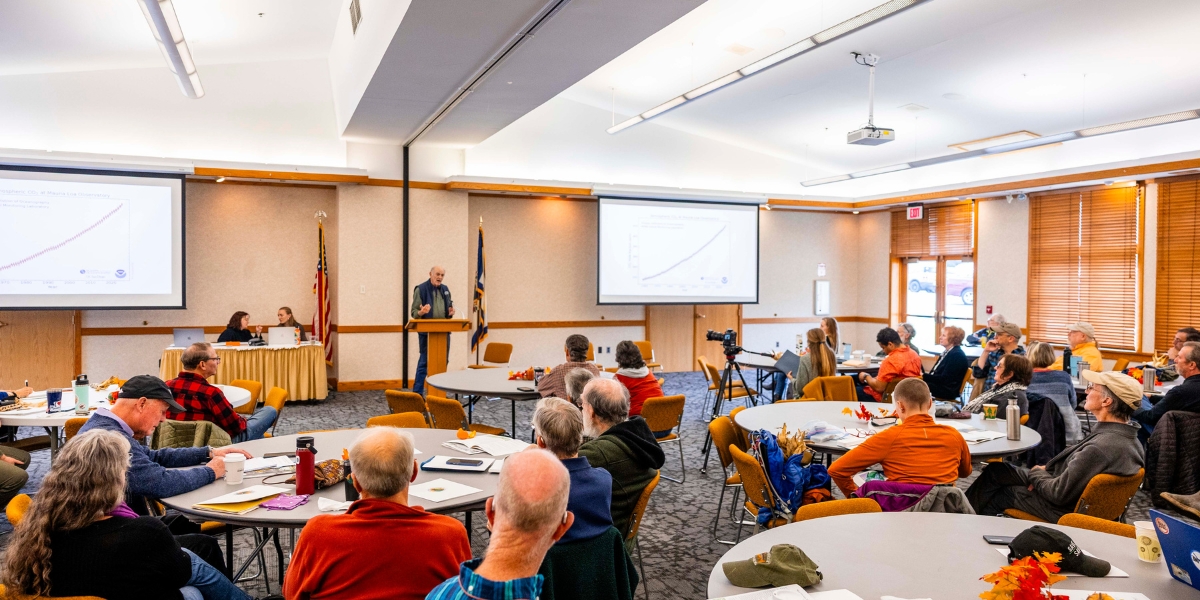
The West Virginia Highlands Conservancy’s 2025 Fall Review brought together advocates, students, and community leaders for a weekend of learning, discussion, and exploration in the heart of the highlands. From hikes across Dolly Sods and Blackwater Falls to thought-provoking panels on climate, policy, and organizing, this year’s Fall Review highlighted both the beauty of West Virginia’s landscapes and the ongoing work needed to protect them.
The weekend kicked off with a Friday afternoon hike in Dolly Sods led by the Dolly Sods Wilderness Stewards, followed by a festive Halloween networking event complete with live music and local camaraderie. But the heart of the Fall Review unfolded on Saturday, where panels and speakers tackled some of the most pressing issues facing Appalachia’s environment.
The morning began with “Federal Policy and Appalachia”, featuring Lyndsay Tarus of the Alliance for Appalachia and Quenton King of Appalachian Voices, who explored how decisions in Washington ripple through West Virginia’s communities and ecosystems. The discussion underscored the importance of grassroots advocacy in shaping national policy outcomes that affect local livelihoods and landscapes.
Next, the “West Virginia’s Legislative Landscape” panel brought together Mike Jones of West Virginia Rivers Coalition, Lucia Valentine of the West Virginia Women’s Alliance, and Delegate Evan Hansen. The conversation examined the year’s biggest environmental battles expected at the State Capitol—from clean water protections to the fight for renewable energy investment—arming attendees with insight and strategies for engaging in the upcoming legislative session.
In the late morning, Rafe Pomerance, a longtime climate policy advocate and Woodwell Climate Research Center fellow, gave a stirring presentation on “The Launch of the Climate Movement and Where We Go From Here.” His talk traced the roots of global climate activism and challenged attendees to keep pushing for bold, science-based solutions in the face of mounting ecological threats.
After lunch, the day turned toward the future with Mary Anne Hitt of Climate Imperative, who spoke on “The Future of Climate Action and the Clean Energy Transition.” Her optimism for the potential of clean energy in Appalachia inspired many, showing how the region’s communities can lead in sustainable innovation rather than be left behind.
Saturday concluded with a panel titled “Looking Back, Moving Forward,” featuring Pam Moe of Corridor H Alternatives, investigative journalist and MacArthur Fellow Ken Ward Jr., and Jim Kotcon of the Sierra Club. Each offered personal reflections on decades of environmental advocacy in the Mountain State, emphasizing persistence, collaboration, and hope as the keys to lasting change. Then, Tyler Cannon, with West Virginia Citizen Action Group, led an energizing session on “Fundamentals of Organizing,” providing practical tools for turning inspiration into action.
Throughout the weekend, attendees also enjoyed guided hikes with park naturalists, a lively Saturday evening presentation by Cameron Layne on the colorful biodiversity of West Virginia’s stream fishes, and Sunday’s Pase Point hike that capped the event with reflection and renewal.
The Fall Review also welcomed several scholarship recipients—made possible through generous support from the American Water Charitable Foundation—whose participation added new energy to the event.
West Virginia University student Jackson Licklider shared, “Never had I met such an inviting and caring group of people. The speakers were extremely informative, speaking on the truth of the issues at stake in West Virginia and, at a broader scope, the world. Leaving this weekend, I felt a first-time certainty for my future and a hope to build a career in integrated nonprofit scientific work within the state.”
Another scholarship recipient, Aleta Rader of Glenville State University, said, “Being in a room full of people making history, influencing legislation that impacts West Virginia and Appalachia, and making public statements about those issues is important. Environmental history is a large part of Appalachian history, and being among those leading that movement was special to me.”
Rader also credited the Fall Review for helping her forge new academic and community connections, including an upcoming student event on native fish conservation inspired by presenter Cameron Layne. “I left with heaps of information, some of which I have already shared with fellow students and even professors new to the area,” she said.
As the WVHC continues its decades-long mission to protect and preserve the state’s wild places, the Fall Review stands as a testament to what can happen when passionate people come together—to share ideas, rekindle hope, and plan for a resilient, thriving Appalachia.
Special thanks to the American Water Charitable Foundation, West Virginia Rivers Coalition, Appalachian Voices, Tiano O’Dell PLLC, Canaan Valley Spa and Wellness Center, Saddles & Smiles, The Breakfast Nook, and Friends of the 500th for helping make this year’s event possible. We’re also grateful to the many businesses and individuals who contributed to the silent auction, helping offset event costs and keep the weekend accessible for everyone.