
By Christa Clasgens, West Virginia Highlands Conservancy
Throughout West Virginia, many native species have become triumphant game fish to anglers both locally and from out of state, from smallmouth bass to brook trout and even walleye. There is a fish with a very long history in the Mountain State that has been coined “the fish of 10,000 casts” because of the difficulty of landing such a prized fish.
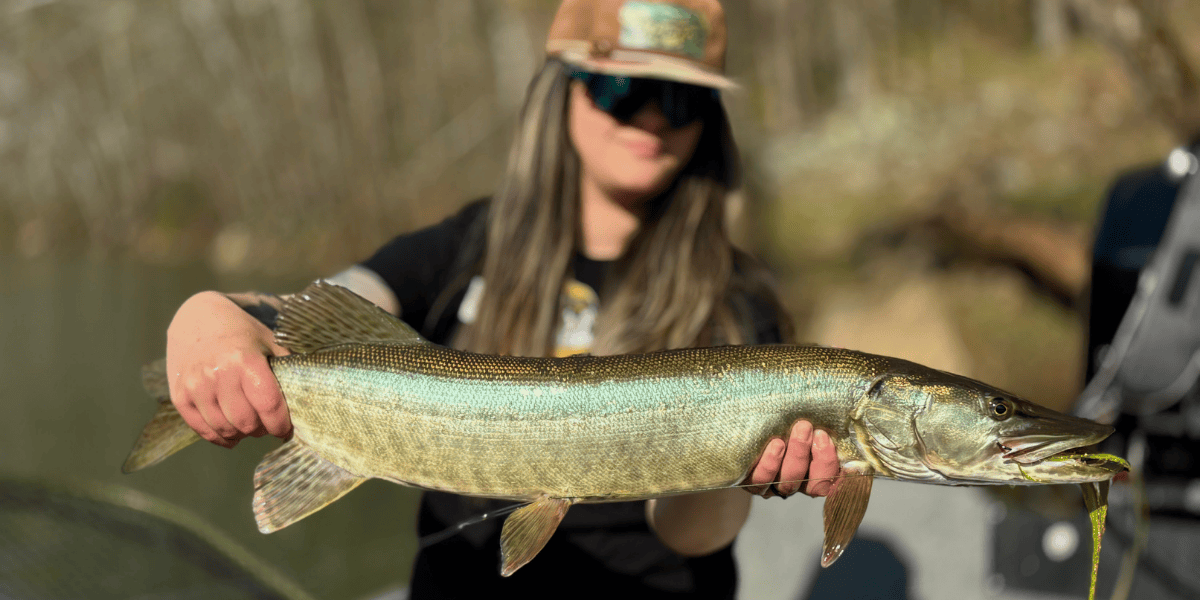
The Musky, or Muskellunge, is a fish with prehistoric features, and its predatory shape and behavior make it the king of the rivers. These fish have a high prey drive and are known to grow to exceptionally large sizes, with the state record measuring 55 inches. But it’s not only the size and the difficulty that are drawing new interest in these fish. The West Virginia Department of Natural Resources (DNR) has been monitoring populations and stocking fingerling musky since 1958, at times implementing a “stocking moratorium” to evaluate whether natural reproduction is sustaining in certain rivers.
Today, current trends in the angling world have increased interest in this species as the next “challenge” for anglers across the state. In a niche part of the angling community, many fly anglers are now also targeting musky with large baitfish-style flies and heavy-duty rods and reels. This method is still more challenging than using traditional gear, as the larger flies and equipment are more difficult to cast and can be taxing after just a couple of hours on the water. However, this doesn’t deter anglers; it feeds their desire to land the fish of a lifetime using unique lures and gear.
So how does increased pressure on these fish affect the fishery? It comes with a learning curve to best determine the health and population of these fish. The WV DNR’s monitoring of populations is helpful, and increased stocking over the years has helped adjust for population loss due to increased pressure. A creek survey conducted by local anglers in the spring of 2024 saw fourteen musky landed by sixteen individuals over three days. These were highly unusual numbers, as anglers are typically lucky to catch one to three muskies per year while targeting them regularly. Even more unexpected was that all gear used was fly equipment, making the success even more remarkable.
Keeping these fish safe comes with the same protocol as for any fish while angling: once caught, keep them wet. Limit their time out of the water, and only keep them out long enough to snap a quick picture before placing them back in the water until they can swim off on their own. A point of caution – these fish are toothy! Ensure you have the proper tools to remove the hook and keep your hands away from their mouth. These fish have hundreds of razor-sharp teeth, and a trip to the hospital for stitches is not uncommon if bitten.
Unknown to many, muskies are a cold-water species. They thrive in colder water with plenty of other fish to feed on. Targeting them in high water temperatures is not recommended, as their mortality rate increases when caught in temperatures exceeding 70 degrees. The main rivers that host the best musky fishing are the Little Kanawha, the Buckhannon, and the Tygart.
If you ever have the success of landing one of these frightening but beautiful fish, take a moment to appreciate their long history of survival, conservation efforts by state and local agencies, and that it only took you 9,999 casts to catch one. As always, practice safe catch-and-release for current and future generations.