
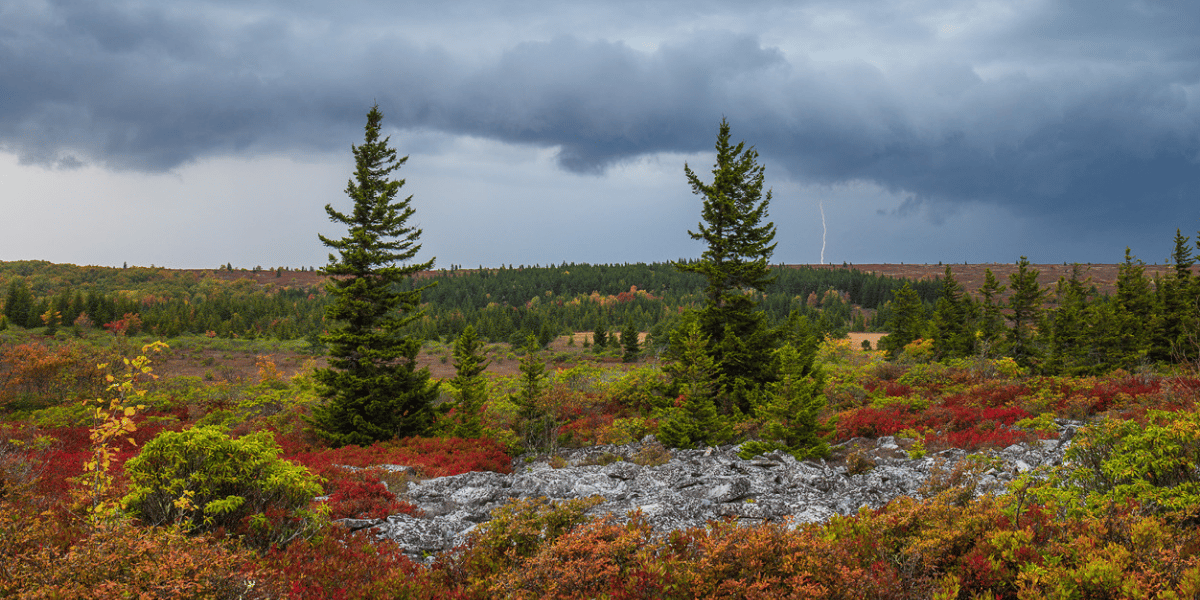
By Cindy Slater, West Virginia Highlands Conservancy
Fall is my favorite season of the year. There is something cozy about wearing your favorite sweater and breathing in the crisp, cool autumn air. The aroma of fall surrounds you as you walk in the woods or, if you are lucky, when you step outside your front door. During the summer months, there is so much moisture in the air that smells often get muddled. When fall arrives and humidity drops, fallen leaves on the ground start to decompose with the help of bacteria and fungi found in the soil. The gases released during this process produce that sweet, familiar smell of fall.
When temperatures drop significantly at night and the days grow shorter, trees send a signal to seal off the veins that carry nutrients to the leaves, trapping sugars produced during sunny autumn days. This process prepares the tree for dormancy during the winter months. Fall colors vary from year to year, depending on factors such as warm, sunny autumn days, cooler nights, late-summer rains, the absence of a hard freeze or major windstorms. In autumn, time becomes especially important. The crisp, near-freezing nights help make the colors “pop” into peak brilliance. Prolonged hard freezes, with temperatures below 28 degrees Fahrenheit, cause leaf cells to rupture, turning vibrant foliage brown and causing leaves to drop prematurely.
The changing of autumn colors happens primarily because of changes in daylight and the process of photosynthesis. Nature sends signals to plants and trees, telling them to stop gathering energy and prepare for dormancy, as I mentioned previously. As chlorophyll breaks down, the green color fades, revealing other pigments that create the brilliant colors of fall.
The “pop” in color comes from maples, which produce scarlet, deep red and burnt orange leaves. Flowering dogwood turns purplish red or deep burgundy. Black gum and sourwood produce deep crimson. Sweetgum displays a brilliant mix of bright red, purple and burgundy. Aspen and birch turn bright golden yellow. Tulip poplar and hickory leaves become golden bronze or yellow. Oaks are the procrastinators of the bunch, turning russet or deep wine brown and often holding their leaves as long as possible, even into winter. American beech leaves turn a soft tan, while elm leaves become brown or dull yellow as they wither.
Some traditions view the shedding of leaves as a symbol of release, a way of letting go and embracing renewal. As we watch fall unfold and the leaves drift from the trees, we can reflect on our own cycles and growth. I hope the beauty of fall leaves a warm place in your heart this year as you watch the colors unfold.