
By Cindy Berdine, West Virginia Highlands Conservancy Member
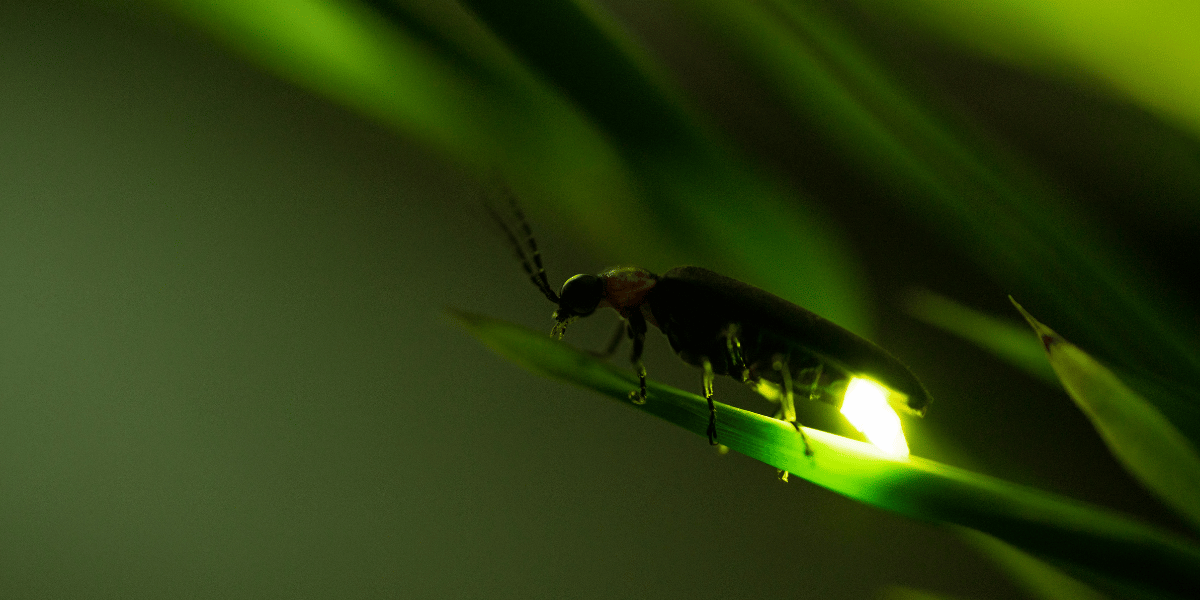
What are fireflies, lightning bugs or European glow-worms? Well, they are not flies at all; they are beetles in the family Lampyridae. In West Virginia, there are more than 31 confirmed species of lightning bugs. Unfortunately, due to habitat loss, light pollution, human activity and pesticides, their lifespan can vary. Depending on their luminosity and life cycle, they may survive in the larvae stage for up to two years. On average, they live only one year in the wild. There are over 2,400 species of lightning bugs worldwide. Synchronized Fireflies are a rare species known as Photinus carolinus. There are around 12 species of synchronized fireflies in the world and three known species in North America.
When does this spectacular nightlife phenomenon happen? It occurs anywhere from mid-May to mid-June and can last through August. The whole process depends on the weather. Ideal life cycle conditions include hot, humid nights with random dense patches of forest, warm tall grass, soil and water. Synchronized fireflies have a four-part life cycle that begins with eggs, followed by larvae, pupa and adult. During their adult stage, they flash for about 20 minutes a night for two weeks and that is it!
Where does this laser light show take place? This beautiful, magical event happens in West Virginia and continues into the Smoky Mountains.
Why does this phenomenon happen? Males flash their lights in perfect, unison usually five to eight times, to attract a mate. Each species has its own light pattern depending on the species and it is interesting to note that not all lightning bugs produce light. The synchronized fireflies’ male-to-female ratio is 100-to-1. Excess light pollution in an area has can interfere with the communication during mating season, causing disruptions in their signaling pattern. Once a habitat is destroyed, sometimes the population may never recover. Leaf litter helps produce ideal areas for egg laying and for larvae to thrive. After the male flashes five to eight times, there are about five to eight seconds of total darkness. During this time, the female is waiting in the grass and then responds with two quick blinks to signal her exact location.
While the primary purpose of their glow is to provide mating signals, fireflies serve as an enchanting reminder of the simple joys in life, encouraging moments of reflection and appreciation for nature’s beauty. This spectacular pulsing light show is something everyone should witness at least once as an adult. It is an unstoppable light show that hopefully future generations will get to experience as well.