By Dave Cooper, West Virginia Highlands Conservancy Member
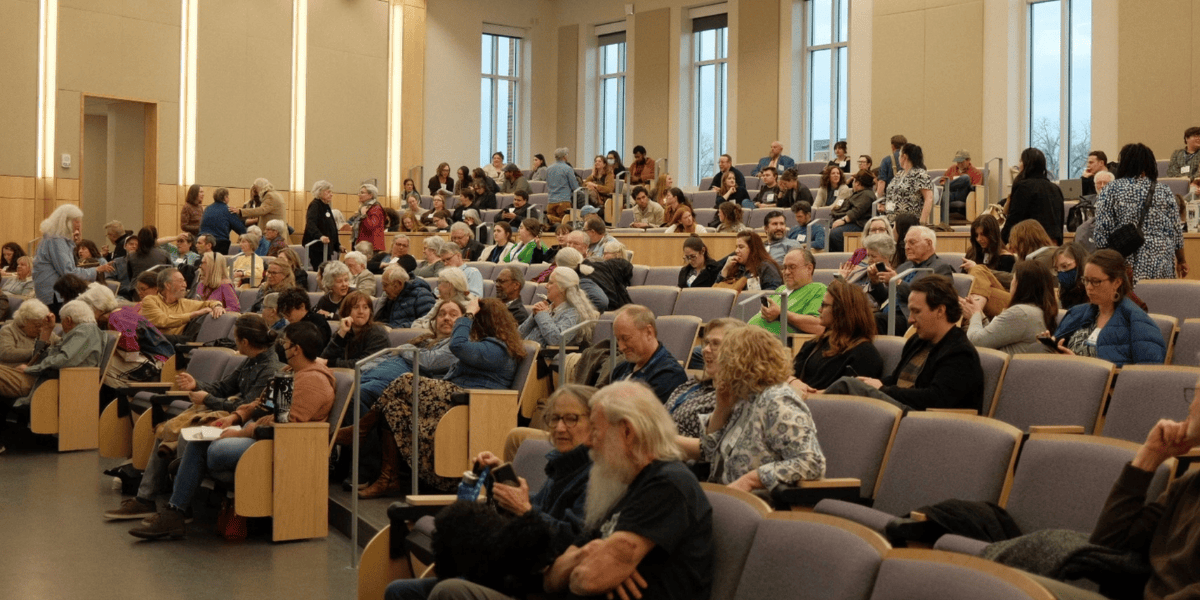
On the weekend of March 20–21, I attended the 49th annual Appalachian Studies Association Conference held at Marshall University in Huntington, West Virginia. This conference brings together activists, writers, students, visionaries, academic leaders, artists, poets, historians and musicians to discuss and celebrate the unique culture and history of Appalachia.
The theme for the 2026 conference was “Power of a Place, Power of Its People,” and this year’s conference chair was Dr. Cicero M. Fain, assistant research director and outreach specialist for the Appalachian Freedom Heritage Initiative, a nine-county, three-state initiative to locate and document Underground Railroad sites in the tri-state region of Ohio, Kentucky and West Virginia.
The conference offered about 250 sessions over two days, and I attended nine. All were interesting and educational. I often had a difficult time choosing which session to attend, as there were too many good ones. Each time slot offered about 25 different sessions. I also led a talk on the music of the anti-mountaintop removal movement, in which I played clips of the songs that I think were most important to the movement.
Some of the conference highlights:
Keynote speaker Dr. Bill Turner, who grew up in Lynch, Kentucky (Harlan County), and became a noted educator and author of “Harlan Renaissance: Stories of Black Life in Appalachian Coal Towns,” “brought down the house” with his spirited talk, “Been to the Mountaintop.”
WMMT and Appalshop led several sessions on the difficulties they have had restoring their historic collection of film and video that was lost in the 2022 flood. A young filmmaker, Nik Lee, presented an endearing short film entitled “Strings” about reclaiming her family’s precious home movie footage from the muck.
The Mine Wars Museum in Matewan, West Virginia, has been hard at work building a museum dedicated to the history of the miners’ rebellion and the 1921 march to Blair Mountain — the largest labor uprising in American history. I’m looking forward to visiting this museum in April.
“Hellbenders as Emissaries of Appalachia,” a talk by Tierra Curry of the Center for Biological Diversity. Curry is a Knott County, Kentucky, native.
“In Honor of Gurney Norman,” a session devoted to readings by the late Kentucky poet laureate.
“Our Land, Our Home: Engagement and Strategy for Legislative Action in Appalachia,” led by members of the Alliance for Appalachia.
“Folk Songs from the West Virginia Coalfields,” convened by Chris Haddox of West Virginia University.
“Resource Extraction and Resistance: Teaching on the Adverse Health Impacts of AI Data Centers in Appalachia and How Communities Fight Back,” presented by Anna Mullany of Appalachian State University.
The conference was a terrific networking event, and I got to meet and talk with so many interesting people. Several times I just sat down next to someone I didn’t know between sessions and had a fascinating conversation. There were lots of professors but also many young people — students are a vital part of this conference. There were musicians, poets, filmmakers, activists and old-timers who shared Appalachian traditions.
There was an Appalachian film festival, but I was not able to attend it. The Jack Spadaro Documentary Film Award was given to “A Beast Touch the Mountain,” directed by James Mottern (Bent Mountain Productions, 2025), which is the story of a band of Appalachian women who fight to protect their land and way of life against a greedy and corrupt natural gas pipeline.
The conference also offered a visit to the site of the tragic 1970 plane crash that killed the entire Marshall University football team, coaches and crew members. Other tour options included visits to the Mothman Museum in Point Pleasant, West Virginia; the Underground Railroad in the tri-state; the Blenko Glass Factory; and the Huntington Museum of Art.
The ASA Conference moves to different sites every year (usually university campuses). The location for next year’s conference had not been determined at press time. But I can highly recommend this conference to any West Virginia Highlands Conservancy member.