
By Christa Clasgens, Membership and Outreach Director, West Virginia Highlands Conservancy
As the temperatures drop and the sun sets earlier, this is the time of year when many retreat indoors. For others—especially anglers—it’s a season they eagerly await. For many, autumn brings some of the best conditions for trout fishing. Increased precipitation raises water levels above summer pools, cooler temperatures create an ideal environment for trout, and the muted sounds of nature blend only with the rush of water past your feet.
In many West Virginia waterways, trout are stocked by the West Virginia Division of Natural Resources (WVDNR) during the fall. A special “monster trout” stocking program recently wrapped up. While visiting your favorite fishing hole, you might find these unusually large fish—and some come with a bonus: tags.
The WVDNR attaches bright pink tags to select trophy-sized trout that give anglers the chance to win a stay at a West Virginia State Park cabin or a Cabela’s gift package. Only 100 trout have been tagged among the many stocked this season.
There are other opportunities these fish provide—especially for ensuring the longevity of our fisheries. Many of the trout stocked in the state are rainbow trout, well-known for attracting anglers from both in and out of state. However, many don’t realize rainbow trout differ from brown and brook trout.
Beyond their distinct color patterns, rainbow trout spawn in the spring, while brown and brook trout spawn in the fall. Harvesting rainbow trout in autumn may prevent them from ever spawning in spring, meaning larger rainbows lose the opportunity to pass on their “monster” genetics. Their significant size difference also means they carry substantially more eggs than the average rainbow.
How can we enjoy trout fishing while also ensuring the success of our fisheries for years to come? By practicing catch-and-release. This greatly increases the chances that the trout you catch will live, spawn, and provide opportunities for others to enjoy the fishery.
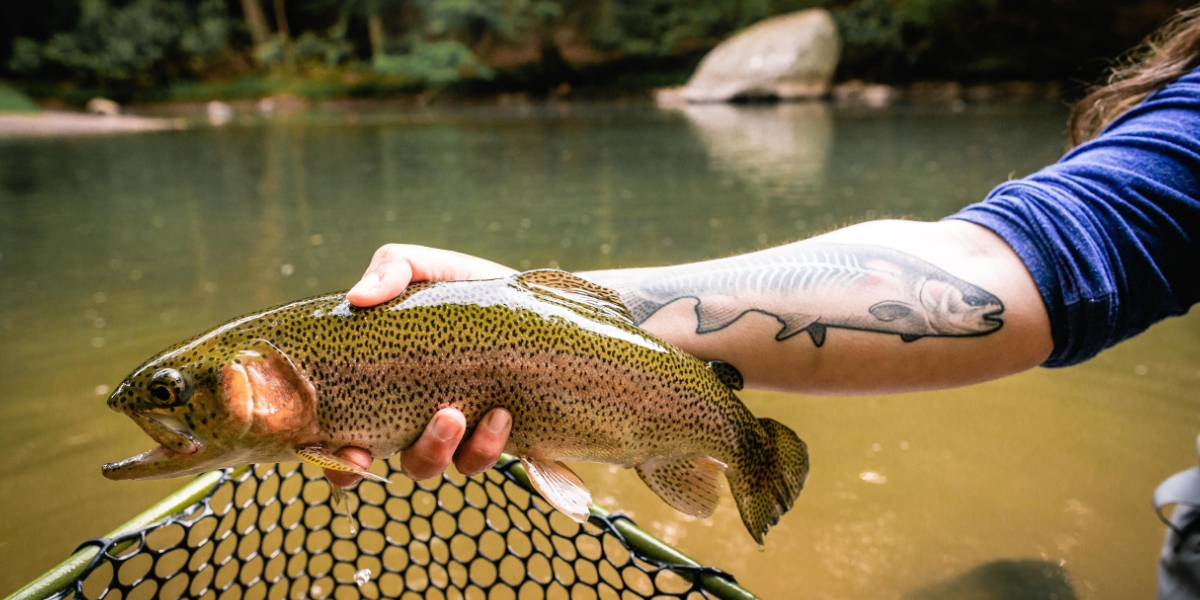
Safe catch-and-release practices include avoiding holding trout by the mouth (as is done with largemouth bass), keeping them wet, using a net when landing them, and handling them only with bare, wet hands. If you want to snap a picture of your fish of a lifetime, keep it in the net and in the water until ready, take a few quick shots, and gently release it back into the water.
There are many waters in West Virginia already designated as catch-and-release sections. Following these regulations—and identifying areas marked as delayed harvest, fly-fishing only, or catch-and-release only—not only prevents citations from the WVDNR but also helps ensure those stretches maintain a robust trout population.
In the angling world, particularly among fly fishers, many live by the credo: “Let them go, let them grow.” If you find yourself in the mountains fishing your favorite stream this fall, consider these tips to ensure that you—and future generations—see more trout in the seasons ahead.