By Jordan Howes, West Virginia Highlands Conservancy
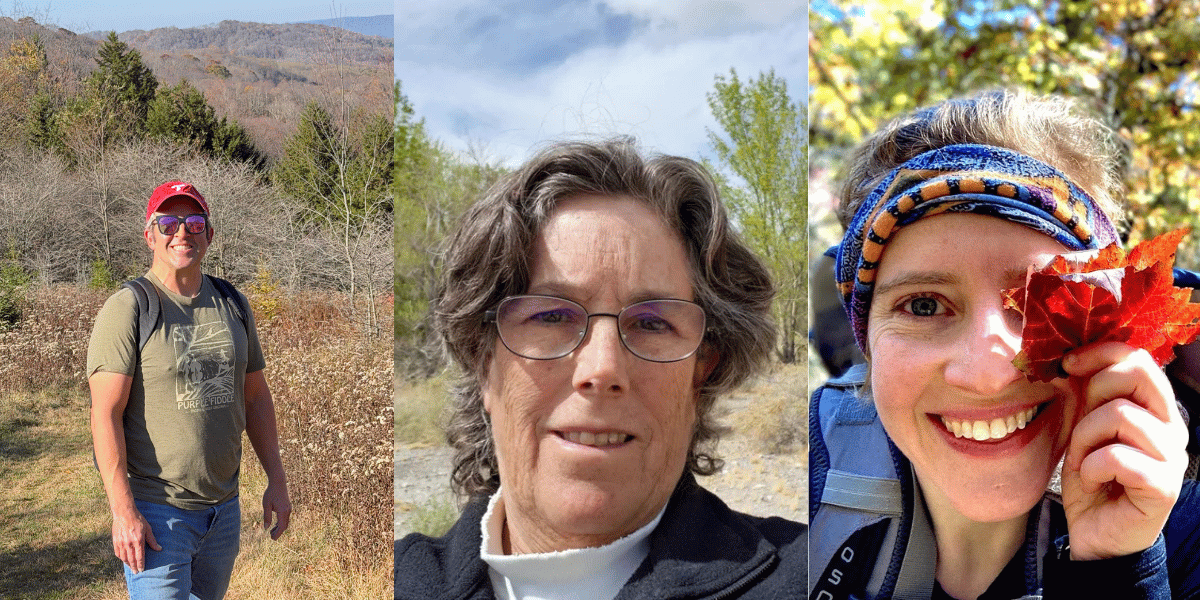
The West Virginia Highlands Conservancy is pleased to welcome three new members to its board of directors: Edward Brzostek, Jeanne Tinsman and Paula Koffman. Each brings a distinct background, professional experience and perspective to the Conservancy’s work. Their combined expertise in forest ecology, wildlife and bird conservation, education, journalism and the arts will add valuable knowledge and new voices to the organization as it continues its work to protect West Virginia’s mountains, forests, rivers and communities.
Edward “Eddie” Brzostek brings a scientific perspective grounded in research on forest ecosystems and the relationships between plants, soil microbes and climate change. A professor with a Ph.D., Brzostek studies biogeochemistry, ecosystem modeling, global change and plant-microbial interactions. His research explores how plants and soil microbes influence the movement and storage of carbon and nitrogen in terrestrial ecosystems, particularly temperate forests.
A central focus of his work is understanding how different tree species promote microbial activity and nutrient availability in soils, and how those relationships affect the amount of carbon forests can store. His lab combines field observations and experiments with ecosystem modeling to better understand how forests respond to environmental changes. Current research includes the effects of tree species on carbon and nutrient cycles, how temperate forests respond to drought and how experimental findings can improve ecosystem models.
Brzostek’s background offers the Conservancy valuable scientific insight into the ecological processes that shape forest health and resilience. As West Virginia’s forests face changing environmental conditions, his research experience can help inform conversations about the importance of healthy, functioning forest ecosystems.
Jeanne Tinsman brings a lifetime of experience studying, observing and protecting birds and other wildlife. Her interest in birds began when she was just four years old, growing up in Pennsylvania, and eventually led her to earn a biology degree from Shippensburg State College, now Shippensburg University. During her final semester, she interned at Hawk Mountain Sanctuary in Pennsylvania, beginning a career that would take her to wildlife refuges, research projects and bird conservation efforts across the country.
Her career has included banding birds for Louisiana State University, counting migrating raptors in Veracruz, Mexico, and working as a general biologist with the California Condor Recovery Program at Hopper Mountain National Wildlife Refuge. She also volunteered at Ruby Lake National Wildlife Refuge, where she banded birds at a Monitoring Avian Productivity and Survivorship (MAPS) station, and helped establish another MAPS station at Mary’s River in Nevada. As a field ornithologist with the Great Basin Bird Observatory, she worked on the Breeding Bird Atlas.
Tinsman also served for 10 years on the Nevada Bird Records Committee, writing and publishing reports in the journal Western Birds. Her career included work with several federal agencies, hummingbird banding at Red Rock Canyon National Conservation Area and, ultimately, work with Get Outdoors Nevada. She retired in February 2023.
Retirement has not ended her involvement with wildlife conservation. Tinsman continues to watch and photograph birds, butterflies and dragonflies and damselflies, and volunteers at national wildlife refuges. Her extensive field experience and firsthand knowledge of wildlife conservation bring an important perspective to the Conservancy’s board.
Paula Koffman brings a combination of creativity, education and public-interest journalism to the board. Raised in Charleston, she now lives in Elkins, where she works as an art teacher in Randolph County public schools. A painter, poet, journalist and educator, Koffman has built a career around both creative expression and engagement with the issues affecting West Virginia.
She also writes a Wednesday column for The Charleston Gazette-Mail, where she advocates for the protection of West Virginia’s air, water and land, as well as political reform. Through her writing, she brings environmental concerns and issues of public importance to readers across the state.
Koffman’s experience as an educator and journalist offers the Conservancy a valuable connection to the ways people learn about, discuss and engage with environmental issues. Her work reflects the importance of communication and public advocacy in building support for the protection of West Virginia’s natural resources.
The West Virginia Highlands Conservancy’s work depends on people with a wide range of knowledge, experience and perspectives. From understanding the science of forest ecosystems to studying wildlife in the field, communicating environmental concerns and educating the next generation, these contributions help strengthen the organization and its ability to meet the challenges ahead.
We are grateful that Eddie, Jeanne and Paula have agreed to serve on the board. Please join us in welcoming them to the West Virginia Highlands Conservancy!