
By C.A. Holmes, West Virginia Highlands Conservancy
Environmentalism has taken many different forms over the years, from local grassroots activism to national non-profits and everything in between. But many of these efforts can be traced back to one event that breathed new life and structure into the movement. On Jan. 28, 1969, a Union Oil well blew out six miles off the coast of Santa Barbara, California. More than three million gallons of crude oil poured into the scenic California shoreline, killing thousands of birds and marine life. This tragedy evoked a fighting spirit in activists around the country, and one year later, on April 22, 1970, Senator Gaylord Nelson of Wisconsin and Activist Dennis Hayes, inspired by the energy of anti-war protests, organized a campus teach-in to discuss air and water pollution across the country. This was the inaugural Earth Day.
Earth Day was welcomed across the country, to the tune of 20 million Americans protesting in the streets and parks to demonstrate against the impacts befalling the earth from industrialization. News outlets across the nation took notice, and Earth Day was heard loud and clear. It unified hundreds of splintered groups fighting environmental injustices and even found support across party lines. Democrats and Republicans, union members and business owners, all supported a responsible approach to our roles as the caregivers of the third planet from the sun.
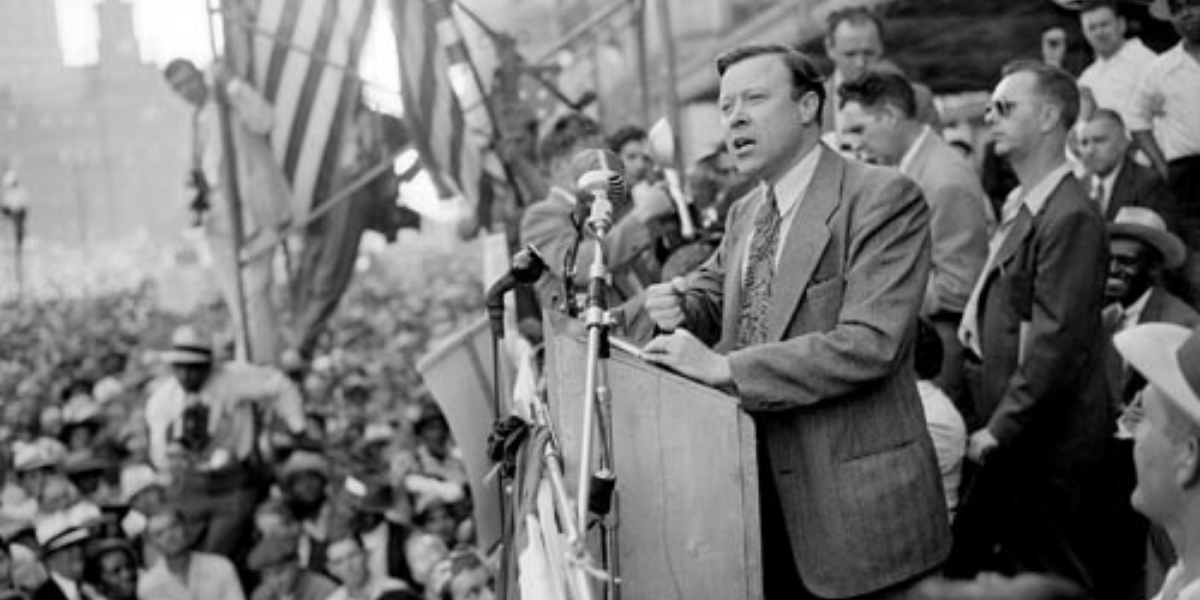
One of the most prominent supporters of Earth Day was West Virginia’s own Walter Reuther. Reuther grew up in Wheeling but left home for Detroit at 19. He talked his way into a senior position at Ford, which he ultimately and controversially “quit” due to his ties to the Socialist Party of America. Reuther eventually became a prominent voice in the Democratic Party and was elected president of the United Auto Workers (UAW). In that capacity, he was a close ally of Rev. Martin Luther King, an envoy to Cuba for John F. Kennedy, and the largest funder of the inaugural Earth Day. Reuther’s presence and support, both in press conferences and on Earth Day itself, lent the cause of the much-needed credibility it needed to succeed.
Ruether said in an address to the UAW in 1970, “What good is a dollar an hour more in wages if your neighborhood is burning down? What good is another week’s vacation if the lake you used to go to is polluted and you can’t swim in it, and the kids can’t play in it?”
Following the first Earth Day, Congress heeded the movement’s call, and we entered into an unprecedented decade of environmental policy. The Environmental Protection Agency (EPA) was established under President Richard Nixon on Dec. 2, 1970, and paved the way for major improvements in regulatory practices. Throughout the next decade, Congress passed the Clean Air Act, Clean Water Act, Endangered Species Act, Marine Mammal Protection Act, Toxic Substances Control Act, and the Resource Conservation and Recovery Act. President Jimmy Carter followed suit in 1978 and continued the phaseout of lead in American gasoline and goods.
Fifty-six years later, as we approach Earth Day 2026 — here in Appalachia and especially in West Virginia—I feel a sense of betrayal of the example set by great West Virginians like Walter Reuther. Our current leaders too often champion commerce over public health, rolling back regulations on above-ground mining storage tanks, inviting AI resource-draining data centers into our “Wild and Wonderful” state, and remaining silent as water quality across the state deteriorates, even when brown water from the southern coalfields was brought onto the floor of the House of Delegates.
Our governor, a notorious lobbyist and “white shoe” lawyer from New Jersey, filed a series of lawsuits against the EPA while serving as the state’s Attorney General on behalf of various coal and energy interests, including West Virginia v. EPA. That case is notorious not only for the courts Republican majority setting the precedent now being used by the current administration to roll back the regulatory authority of the Clean Air Act established after the inaugural Earth Day, but also for the peaceful protest that occurred on Earth Day 2022. That day, on the steps of the Supreme Court, climate activist Wynn Bruce self-immolated himself as the court heard Morrisey’s arguments.
West Virginia has an Earth Day legacy worthy of reclaiming. We have a responsibility as the custodians of this land, to honor it and protect it for future generations. We are Mountaineers, and we must fight to preserve the very mountains that give us our namesake. This Earth Day, show your pride for our environmental activist roots and show up for the earth. Be like Walter Reuther, not like Patrick Morrisey.