By Andrew Young, Staff Attorney for the Allegheny-Blue Ridge Alliance
At long last, the coal trucks have fallen silent on Sugartree Bench Mountain at the headwaters of the South Fork Cherry River. South Fork Coal Company – the rogue operator that used an illegal haul road through the Monongahela National Forest – is shut down for good. In August, the company’s parent firm announced it would liquidate rather than continue mining after failing to find a buyer. And on Sept. 16, 2025 the United States Forest Service terminated the road use permit for South Fork Coal Company’s use of forest roads for coal hauling. This decision caps a major legal and regulatory victory: the illegal haul road slicing through public forest has been shut down by enforcement authorities, and with South Fork Coal in bankruptcy, the immediate threat of ongoing coal mining in the South Fork Cherry River watershed has finally been stopped, for now. For the first time in years, this wounded corner of the highlands can begin to heal without the rumble of coal trucks or the fear of new strip mining and blasting looming overhead.
This victory did not come easily or quickly. It was earned through the tireless efforts of a broad coalition of people who refused to give up on these mountains. Local residents, conservation groups, and concerned citizens sounded the alarm and kept up the pressure. West Virginia Highlands Conservancy, Appalachian Voices, Allegheny-Blue Ridge Alliance, and others exposed South Fork Coal’s abuses and then fought them in court and through regulatory channels. Attorneys from Appalachian Mountain Advocates and allies like the Center for Biological Diversity took on the legal battles. Outdoors enthusiasts, from trout fishermen to hikers to hunters, lent their voices, submitting thousands of public comments against allowing coal hauling in the national forest. Even some regulators eventually answered the call: the Office of Surface Mining Reclamation and Enforcement and the West Virginia Department of Environmental Protection finally stepped in to issue violation notices and cessation orders when the evidence of lawlessness became impossible to ignore. It took a village – a determined, passionate village – to stand up to this outlaw operation. I am grateful beyond words for each person who has so far played a part. But as satisfying as it is to celebrate this hard-won victory, I want to spend most of this space looking forward. Because now comes the real work: ensuring this place recovers and is never threatened again.
Reclaiming what should have been
One fact gives this moment a profound sense of justice: the mines and haul roads we have fought over lie entirely within the original proclamation boundary of the Monongahela National Forest. Over a century ago, when Monongahela National Forest was established in 1920, these lands were envisioned as part of the public estate. They’re high in the headwaters of the Gauley River and Greenbrier River systems, rich with red spruce forests and streams. Generations ago, the Cherry River Boom and Lumber Co. (a timber company, now Weyerhaeuser) acquired this tract before the Forest Service could.
With the coal company gone, those scarred mountains and valleys should be brought into the fold of the Monongahela National Forest or otherwise permanently protected and restored to native habitat. I firmly believe that adding this acreage to the national forest is the best outcome. If these ridges and hollows become public land, never again can anyone scheme to carve up the mountains for short-term profit. Mining and other destructive uses would be effectively off-limits – protected by the same laws that have safeguarded Dolly Sods, Seneca Creek, and other treasured parts of our eastern national forests for decades. But more importantly, it would provide public access, recreation opportunities, and good jobs.
Transferring the land to public ownership won’t happen overnight, but we should start laying the groundwork now. Weyerhaeuser and public officials need to come to the table and talk about a deal to transfer or sell this land for conservation instead of letting the zombie mines rot in perpetuity and continue to decimate the watershed with toxic mine drainage, and standing as a huge flood and erosion risk. Fortunately, we have precedent on our side: at the Mower Tract, West Virginia has seen large tracts of former mine land restored in the Monongahela in recent decades, securing funding, getting the cleanup and restoration done, and developing the land for public access and recreation opportunities. We also just saw the huge success in the 2025 acquisition of the Blackwater Canyon land into the Monongahela National Forest from Allegheny Wood Products after years of efforts by advocates. Why not here? This place has always belonged among the protected wild lands of the Mon. Let’s make it happen.
Healing the land
Protecting the South Fork Cherry River watershed on paper is only one piece of the future we must build. The other piece is healing the physical landscape after years of devastation. I’ve flown over and walked the edges of the South Fork Coal strip mine moonscape, and each time felt my heart sink at the sight of once-green mountainsides denuded and gouged open. Over 3,600 acres of mines and infrastructure now sit idle here, still dumping sediment and acidic runoff into streams whenever it rains. Toxic, orange-stained water permanently discharges from a failed wet seal on the abandoned South Fork Deep Mine No. 2, and from the Lost Flats complex refuse storage site, a stark contrast to the clear, cold streams this area is otherwise known for. The damage is real, but it should not be forever. The Allegheny Highlands are tremendously resilient. With care and commitment, nature can and will rebound – and we can lend a helping hand in that recovery while creating jobs and restoring our connection to the land.
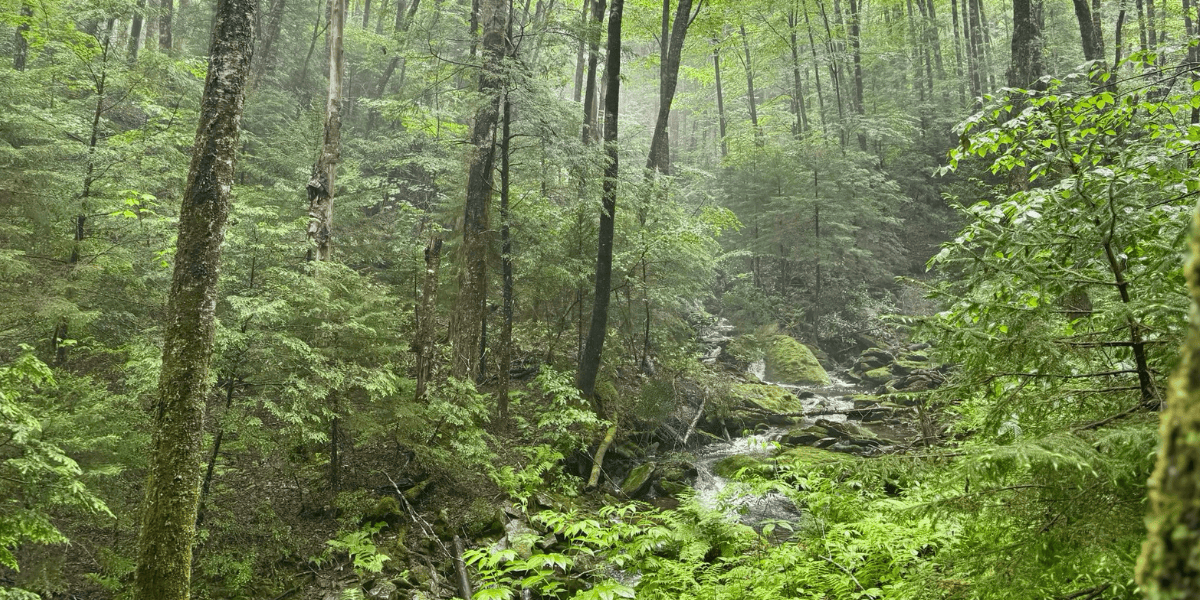
Picture this: a decade or two from now, the currently bare mine sites are blanketed with young red spruce and native hardwood saplings, planted by crews of local restoration workers. Red spruce is a keystone of these high elevations, and bringing it back will revive not just the forest canopy but whole ecosystems of birds and mammals that rely on spruce. In the creeks below, erosion has been curbed; volunteers and experts have stabilized slopes and restored streambanks. As vegetation returns, the South Fork Cherry River runs clear and cold again, providing a healthier home for native brook trout and rare species like the candy darter and hellbender that cling to survival in these waters. A flood-resilient river valley begins to reform as the replanted forests soak up heavy rains. (Richwood knows all too well the importance of this – healthy forests upstream are a bulwark against the kind of catastrophic flooding that has ravaged the town in the past.) Instead of denuded moonscapes visible from the Cranberry Wilderness and Highland Scenic Highway, future hikers on the Fork Mountain Trail will look out on green ridgelines and young forests reclaiming their rightful place. The land will start to resemble its old self, full of life.
Just as exciting, this restoration can create stable, skilled jobs for local people. Reclaiming a large mine complex to native habitat is not weekend volunteer work. It is a multi-year endeavor requiring heavy equipment operators, tree planters, hydrologists, wildlife biologists, and more. I would love to see some of the very miners who lost their jobs with South Fork Coal hired on to help reclaim these mines and restore the streams. In a not immediately apparent way, it makes perfect sense, because who knows the land better than those who worked it? With training and support, former coal workers could find dignified, meaningful work turning a former mine site into a thriving native forest. This kind of restoration economy could sustain families here for years, and the pride that comes from healing your own home ground is immeasurable. We owe it to these workers and their families to create that opportunity – to show that environmental restoration isn’t a pipe dream and could be a real, near-term economic pillar for coal impacted communities across Appalachia.
A new hope
For the towns near the South Fork Cherry River – places like Richwood, Nettie, and Fenwick – this moment represents a chance to break the cycles of boom and bust that have defined and held captive the local economy for generations. Richwood was built on extraction; a century ago it was a booming timber town that famously billed itself the “Lumber Capital of West Virginia.” When the big timber was gone, the town struggled, and more recently it pinned hopes on coal and other industries that never truly panned out. With South Fork Coal’s liquidation, coal has once again left everybody downstream holding the bag with tens of millions of dollars in reclamation work undone and workers left without employment, while shareholders in New York and Virginia and Toronto lined their pockets. It is a story played on repeat for the last century here. The wounds from those busts are tangible, and playing out once again: lost jobs, population decline, and a tax base that can’t support public needs. Even worse, the practices of timber and coal extraction have left the area more vulnerable to forces of nature – for example, the loss of forest cover upstream was one factor that exacerbated flooding when record rains came. Richwood was devastated by floods in 2016, a disaster that underscored how urgently we need to restore and protect our watersheds.
Now, with the South Fork Coal mine halted, Richwood has an opportunity to pivot toward a different kind of future. The ingredients for success are all here. This region’s natural beauty – the same impressive rivers and mountains that were seen as impediments to development – can be the foundation of a sustainable outdoor recreation based economy. In fact, Richwood has already begun embracing this identity as a “Gateway to the Monongahela National Forest.” If we secure permanent protection and robust restoration for the South Fork Cherry River area, we could eventually see new trailheads just outside Richwood, anglers traveling from afar to fish its reborn trout streams, hunters and hikers exploring its ridges in the fall, and paddlers running the Cherry downstream. Those visitors will need places to eat, sleep, and get gear; local entrepreneurs can rise to meet that demand, creating new businesses and jobs. And it’s not only about tourism: the quality of life improvements that come with a healthy environment – cleaner water, safer communities, pride in one’s surroundings – make it easier for local people to stay and raise families here. In short, investing in restoration is investing in the long-term vitality of Richwood and all the communities of the Cherry River valley. It’s a path out of the extractive death spiral, toward something more lasting and enriching.
All hands on deck
None of these visions will become reality by default. We have a window of opportunity right now, and it’s going to take all hands on deck to seize it. That means everyone has a role to play. First and foremost, Weyerhaeuser, the private timber company (and largest landowner in the USA besides the federal government) that owns the surface and mineral estates, must be part of the solution – whether through a land sale, a land swap, or an agreement to collaborate on restoration and conservation. I know that might sound optimistic, but I believe even big corporations can do the right thing, particularly when they have no other choice, and they should be given the chance to help us get it done.
The remaining minable coal in the watershed relies upon use of national forest road(s) and will never be mined without overwhelming resistance from the public and drawn out legal and regulatory battles. Instead of getting shortchanged on their royalties when their mineral leasee (South Fork Coal this time) goes bankrupt, Weyerhaeuser has a chance to make the right decision here and either sell (at least the mineral lease) to a conservation entity and eventually deed to the national forest, or at a minimum, commit to prohibiting future mining and place the area into some form of conservation easement. The U.S. Forest Service also needs to step up. They should be our allies in adding this watershed into national forest ownership, as well as seeking federal funding for land acquisition and the mine restoration projects. The West Virginia Department of Environmental Protection has a legal and moral duty here as well. WVDEP should aggressively use the tools at its disposal – revoking South Fork’s permits, seizing the full reclamation bonds, and getting reclamation moving now, whatever it takes. No more foot-dragging for another decade; every month of delay means more pollution in the Cherry River and more risk of unreclaimed highwalls collapsing or mudslides occurring. We can and will keep the pressure on WVDEP to make sure they enforce the law and prioritize this cleanup.
Federal, state, and local leaders and officials in Nicholas and Greenbrier counties have a stake too. They can advocate for state and federal assistance, help coordinate retraining programs for displaced miners into restoration work, and ensure that any planning integrates this new vision for the area. Labor unions and workforce development groups can help organize the labor needed – whether it’s the United Mine Workers or construction unions – to guarantee that restoration jobs are good jobs with fair wages and benefits. Our academic and scientific partners can contribute expertise: ecologists and hydrologists to design restoration plans, foresters to guide replanting of red spruce and hardwoods, and fishery biologists to monitor stream recovery. Environmental and sportsmen NGOs are already mobilizing and will remain crucial. Groups like the Allegheny-Blue Ridge Alliance, Appalachian Voices, West Virginia Highlands Conservancy, Trout Unlimited, WV Native Fish Coalition, WV Backcountry Hunters and Anglers, West Virginia Rivers Coalition, Sierra Club, and many others have passionate members who can volunteer on-the-ground or lobby for funding and policy support to get this done. In short, this is a team effort on the grandest scale – the kind of effort that can actually succeed when we all pull in the same direction. The good news is, after watching so many different groups and people come together to stop the mining, I have more faith than ever that we can keep working together to restore the land and protect it forever.
An invitation to shape the future
Writing this, I feel a profound mix of gratitude, responsibility, and hope. Gratitude for the unlikely alliance of people who delivered us to this point. Responsibility, because declaring victory is just the beginning of another chapter – one where we must be as dogged and passionate about restoration as we have been about resistance. And hope, because I’ve seen the power of community and I’ve seen how resilient nature can be when given a chance. As I imagine the South Fork Cherry River watershed twenty or thirty years from now, I can envision hearing the wind in stands of young spruce and the rush of clean water over rocks. I can see families catching glimpses of brook trout darting in clear pools. I picture former miners pointing out areas of red spruce they replanted with their grandchildren, with pride in their voices. I see Richwood hosting the annual Cherry River Festival not to lament what has been lost, but to celebrate a living, thriving watershed that sustains the town in new ways.
That vision won’t materialize on its own. It’s up to us to make it real and make it ours. So I’m writing today not only to share a story, but to extend an invitation. Whether you’re a lifelong Highlands Conservancy member or someone new to this issue, your ideas and energy are needed now. In the coming months, there will be ways to get involved – I invite you to join in. Help us demand that these lands be placed into public hands. Come out and plant a tree or help build a trail when the time comes. If you have expertise, lend it; if you have influence, use it. And if you simply love these mountains, raise your voice for them. The South Fork Cherry River is writing a new chapter, moving from exploitation toward renewal and hope. Let’s all be authors of that chapter. Together, we can ensure that this special place – now scarred by greed – becomes a national example of restoration, resilience, and community-powered change. ABRA, the Highlands Conservancy, and our numerous partners will be there every step of the way. I’ll be there. I hope you will be too. Let’s go build the future this watershed deserves.