By Luanne McGovern, West Virginia Highlands Conservancy
The fight against the proposed Fundamental Data natural gas power plant in Tucker County continues. The primary focus over the past two months has been rallying opposition to the air quality permit.
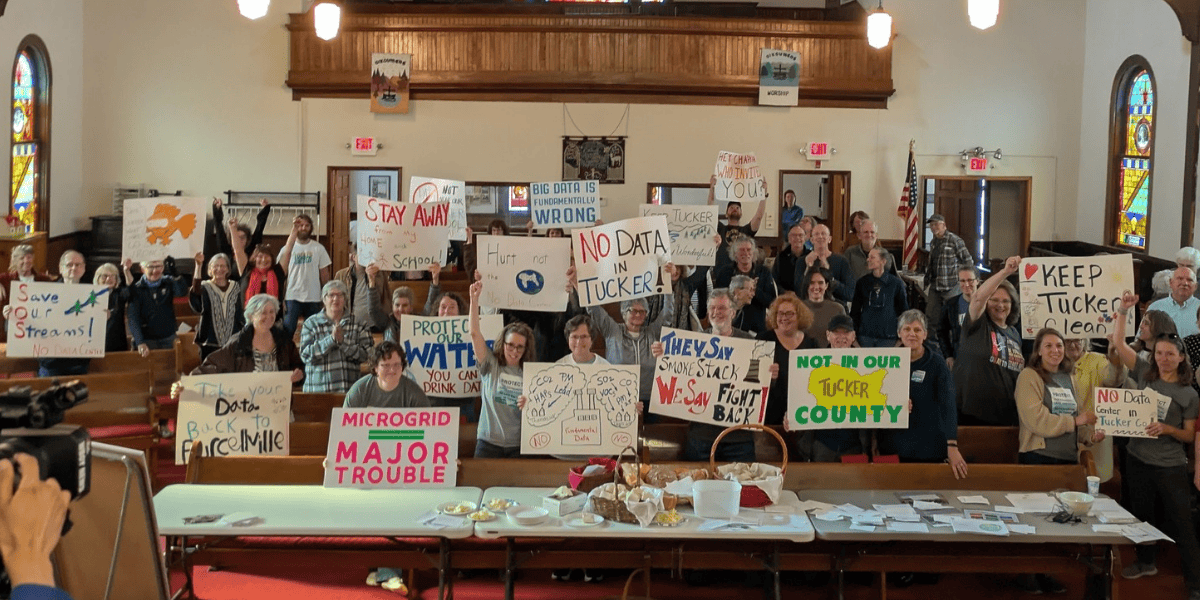
The West Virginia Department of Environmental Protection held an in-person public meeting at Canaan Valley State Park on June 30. Over 400 people attended to express their concerns, and the meeting ran for over six hours. Dozens of citizens rose to voice both technical and emotional appeals to the DEP to not approve the permit. On July 17, the DEP hosted a virtual online public meeting to accept further comments. By the comment deadline of July 18, 1,605, written and 18 oral comments have been submitted in opposition to the project.
Despite this massive public outpouring of concern, the DEP issued the permit to Fundamental Data on August 15. A few minor changes were incorporated into the final version of the construction permit, based on the comments received:
- Addition of hourly and annual formaldehyde emission limits. Also requires an initial performance test for formaldehyde emissions when combusting natural gas.
- Addition of language around optimal ammonia injection rate for the SCR, monitoring requirements and recordkeeping for ammonia usage.
- Addition of recordkeeping requirements for fuel consumption and gross energy output.
Overall, these changes were minor compared to the hundreds of comments received. The DEP response to public comments required 140 pages to effectively state that Fundamental Data’s permit application was accepted with minimal change. Citizen concerns about major-vs-minor source permit type, impact on residents’ health, inconsistencies and incomplete information in the permit application, etc., etc., were all dismissed.
The DEP has been very clear that their agency’s purpose is to expedite the approval of air permits for industry, and this is directly in line with the goals of the Morrissey administration.
As stated in their response: “The Secretary shall, to the extent possible, give priority to the issuance of any such permit so as to avoid undue delay and hardship. The Division of Air Quality shall issue a permit unless:
- a determination is made that the proposed construction, modification, registration or relocation will violate applicable emission standards,
- will interfere with attainment or maintenance of an applicable ambient air quality standard,
- cause or contribute to a violation of an applicable air quality increment, or
- be inconsistent with the intent and purpose of this rule or W. Va. Code §22-5-1 et seq.
In parallel, Tucker United, Friends of Blackwater and the Highlands Conservancy filed an appeal to the Air Quality Board on June 10, that Confidential Business Information (CBI) claimed by Fundamental Data did not meet the legal requirements of “trade secrets.” The heavily redacted air permit application has made it impossible for citizens to understand the scope and impact of this potential project fully.
On July 17, the DEP filed a motion to dismiss the appeal, stating that the appeal has no basis. After many weeks of runaround, the board finally met with our lawyer, Brent Easton, on Sept. 3, and decided to dismiss our appeal, siding with Fundamental Data. The decision was not surprising, given the nature and makeup of the board. Next steps are being considered.
“The West Virginia Air Quality Board is a quasi-judicial Board of review responsible for hearing appeals regarding the issuance or denial of permits, permit conditions, or enforcement decisions rendered by the West Virginia Department of Environmental Protection, Division of Air Quality. The Board is composed of seven members, five of whom are appointed by the Governor with the advice and consent of the Senate and two ex-officio members who are Commissioners of the Bureau for Public Health and the Department of Agriculture.”
While DEP and the Air Quality Board have cleared the way for Fundamental Data, the fight to protect Tucker County’s air, water, and communities is not over, and we will continue working to ensure this massive industrial facility does not permanently destroy the Highlands.