
By Cameron Layne, West Virginia Highlands Conservancy
The Appalachian mountains are widely considered one of the most biodiverse regions in the United States, with West Virginia high in the ranks of organismal variety. West Virginia is home to over 32,000 miles of rivers and streams that hold nearly 200 fish species, two of which are federally listed as endangered. One such fish, the Diamond Darter, is referred to as one of the 12 most imperiled species in the southeastern U.S. and can only be found in West Virginia.
Additionally, nearly a dozen freshwater mussels and two species of crayfish that occur in our state are federally listed. Fishes and freshwater mussels are some of the most imperiled organisms in the nation, with some species already lost to extinction. Imperiled species such as these can tell us much more than simply threats to our native biodiversity but often act as some of the first indicators of such threats, allowing for early intervention.
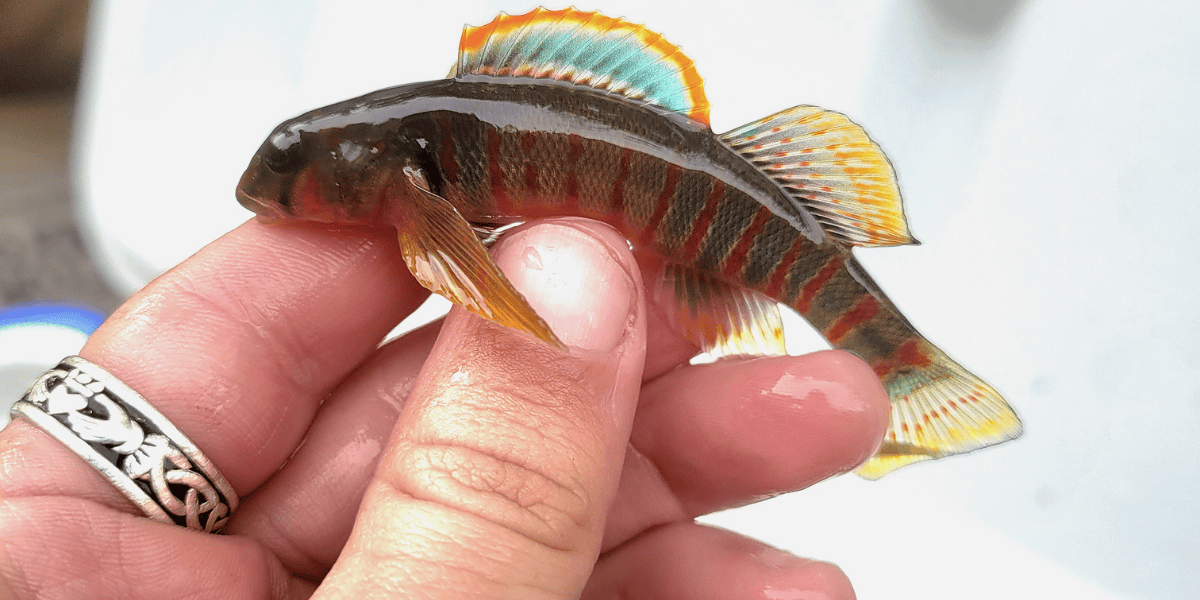
A handful of native fishes in West Virginia are often referred to as “hidden gems.” This typically applies to many of our eye-catching species, such as Brook Trout and Candy Darter. These organisms can serve as benchmarks of water quality, play pivotal roles in their ecosystems, and add a unique identity to the regions in which they inhabit. Their presence alone is enough to make one appreciate the allure of their respective town or the watershed in which they live. They deeply embody what it means to be a jewel of Appalachia. However, in White Sulphur Springs, West Virginia, amidst the brick and concrete lies a true gemstone.
The U.S. Fish and Wildlife Service (USFWS) operates a unique fish hatchery in this charming town that specializes in endangered freshwater species propagation. This facility aims to “raise fish and other aquatic species to support recreational fishing, tribal subsistence fisheries, and the recovery and restoration of imperiled species.” Although this hatchery also raises desired angling species, like Rainbow Trout, it also provides a distinct service towards aquatic endangered species’ recovery.
The collaborative minds and hands that have aided in species propagation at this facility have achieved success with species such as Candy Darter, Big Sandy Crayfish, and Salamander Mussel. These propagated species are then stocked into waterways within the native species’ ranges with supportive habitat for longevity. Regarding successful Candy Darter propagation and stocking efforts in 2022, Andrew Phipps, a biologist at the White Sulphur Springs National Fish Hatchery, claimed in a 2022 article, “A Sweeter Future for Rare Candy Darter,”
“It was a long time and a lot of hard work by so many people. We played just one role in what was a big play. We are honored to get to work with this animal and all the folks who care so much about it. To finally get to release these animals after watching them hatch and grow for the past six months is so rewarding,” commented Leah Riley, 2022, A Sweeter Future for Rare Candy Darter.
I was a fisheries technician with the West Virginia Division of Natural Resources at the time of the first successful stocking of Candy Darters during this collaborative effort with White Sulphur Springs National Fish Hatchery. The facility is unlike any other standard hatchery. Instead of large raceways and crowded holding tanks, the organisms are kept in separate propagation aquaria that provide the species with everything they need to feel comfortable enough to reproduce. Their needs are met, and in turn, so are ours.
It is clear that the standards of this fisheries facility are upheld to ensure the capability to produce endangered species for future stocking efforts. With this, the importance of such a hatchery within West Virginia is significant to the local community of White Sulphur Springs, as well as the state and federal resource agencies that work diligently to protect imperiled aquatic species.
The passion for aquatic conservation that runs rampant through this facility is nothing short of inspiring. This hatchery continues to operate with a dedicated team toward a common goal of restoring and preserving West Virginia. To see such unique species thrive is what helps keep Appalachian voices heard. For this reason, the White Sulphur Springs National Fish Hatchery acts as a megaphone of environmental resilience for future generations.
Sources:
WV federal species https://wvdnr.gov/wp-content/uploads/2022/11/TE-species-list-20220919.pdfhttps://www.fws.gov/program/endangered-species/species
Diamond Darter desperate dozen https://tnaqua.org/wp-content/uploads/2025/09/The-Desperate-Dozen_-Southeastern-Freshwater-Fishes-on-the-Brink.pdf
Drew Phipps quote about candy darters https://www.fws.gov/story/2022-11/sweeter-future-rare-candy-darter