By Kevin Zedack, Appalachian Voices
On Aug. 3, 1977, President Jimmy Carter — flanked by 200 coal community advocates from across the country — signed the Surface Mining Control and Reclamation Act into law in the White House Rose Garden.
SMCRA’s passage came after a six-year campaign driven by those same concerned citizens from Appalachia, the Midwest and Mountain West, and energized by the 1972 Buffalo Creek disaster in Logan County, West Virginia, where 125 people were killed by 130 million gallons of coal slurry that burst through an earthen retention dam. People were tired of coal companies leaving their messes behind, dumping deadly pollution into their communities and putting them at risk for catastrophic disasters.
Much has been written about President Carter since his passing at the end of 2024 — from his advocacy for clean energy solutions during the energy crisis of the 1970s to his support of Habitat for Humanity after leaving the White House — but one of his greatest accomplishments for the people of Appalachia, and coal communities across the country, was signing SMCRA into law.
Given the bill’s anniversary this week, this is a good opportunity to discuss SMCRA’s intent, where it’s fallen short over the years and how the Trump administration is undermining SMCRA’s protections by expanding coal mining and sacrificing the health and economic success of Appalachian communities for coal profits.
What’s in SMCRA?
SMCRA established the legal framework through which all coal mining companies must operate in the United States, as well as the Office of Surface Mining Reclamation and Enforcement for administration of the new law. There are essentially five regulatory components to the law:
- Environmental standards in SMCRA include requirements for coal mining operations to protect communities from issues like mine runoff polluting local water, dumping sediment into rivers, leaving unreclaimed mine lands with dangerous highwalls and otherwise abandoning unsafe facilities. Before the passage of SMCRA, there were no federal standards for steps a mine needs to take during operations to reduce its environmental impacts or standards for reclaiming mine lands after the mine closed. SMCRA instituted requirements to reduce environmental impacts of coal mining during mine operations and after mining operations ceased.
- Permitting requirements in SMCRA established federal oversight of mining operations from exploration through reclamation. Permit applications provide the federal Office of Surface Mining Reclamation and Enforcement with information about the proposed area’s pre-mining environmental conditions and land use, how the mine will meet SMCRA environmental standards and how the land will be used after reclamation. OSMRE uses this information to assess whether or not the proposed mine will adequately protect the environment and local communities from hazardous mining activities. The proposed mine should only be issued a permit if coal companies can prove how they will minimize environmental harm from their operations.
- Bonding requirements in SMCRA were intended to ensure that reclamation responsibilities would be paid by coal companies, regardless of whether or not the company themselves were financially able to reclaim the mine site after stopping operations. Before the passage of SMCRA, many mines were fully abandoned by coal companies, leading to millions of acres of abandoned mine land across the country that are still being reclaimed today with a mix of industry and taxpayer funding. Notably, bonds secured by coal companies for reclamation are meant to be “funds of last resort.” SMCRA directs coal companies to reclaim the land as mining activities proceed; when they complete stages of reclamation, they receive payment back from the bond. If a coal company is unable to complete reclamation activities as required by SMCRA, the bond funding is dispersed to the regulatory agency so that reclamation activities are paid for by the coal company and not by taxpayers.
- Inspection and enforcement mechanisms were established in SMCRA to ensure coal companies are following the law. OSMRE was established as the federal office responsible for inspecting mining operations for environmental compliance (the Mine Safety and Health Administration is responsible for worker safety compliance), financial oversight of mine companies and issuing “notices of violation” that can levy fines or order mining to cease depending on the permit violation.
- Land restrictions included in SMCRA list federal lands that are unsuitable for coal mining. SMCRA preserves and protects some of our country’s most cherished natural heritage sites by prohibiting coal mining on any lands in the National Park System, National Wilderness Preservation System, the Wild and Scenic Rivers System and in national forests, with few exceptions.
SMCRA also created a federal program to pay for the reclamation of previously abandoned mine lands by assessing a fee on coal mined after 1977. The intent of the Abandoned Mine Land Trust Fund was to ensure the costs of the coal industry on our land and water were paid by the industry, not taxpayers.
How has SMCRA fallen short of its promises?
As we reflect on the last 48 years since SMCRA’s passage, we recognize a number of shortcomings in the law that groups like Appalachian Voices are fighting to resolve on behalf of our communities. For example, we know that:
- As the coal industry continues to decline in profitability, more coal companies are unable to fulfill their reclamation obligations. The business case to hobble along and maintain operations – at least on paper – results in a number of actions that put our communities at risk, including indefinite idling of mines with minimal, if any, reclamation completed and bankruptcy proceedings that shed reclamation liabilities. The emergence of these “zombie mines” poses a significant threat to the economic future and environmental health of Appalachia, keeping more than 600,000 acres of land out of productive use for community-driven projects and potentially poisoning our land and water.
- Current bond requirements are woefully inadequate to ensure financial responsibility of coal companies for reclamation. The state of Tennessee publishes an annual report on its reclamation liabilities as the state works to regain state oversight for mining from the federal government, even though the state has not produced any coal since 2022. The state’s 2025 primacy report says Tennessee’s bonds are $27 million short of addressing the reclamation needs of the state. That’s a $27 million bill for taxpayers because of administrative undervaluing of bonds or changes in the reclamation needs due to mining operations that were not reflected in the bond value over the lifetime of the mine. Across Appalachia, this is a $3.7 to $6 billion problem created by coal companies that leave taxpayers on the hook.
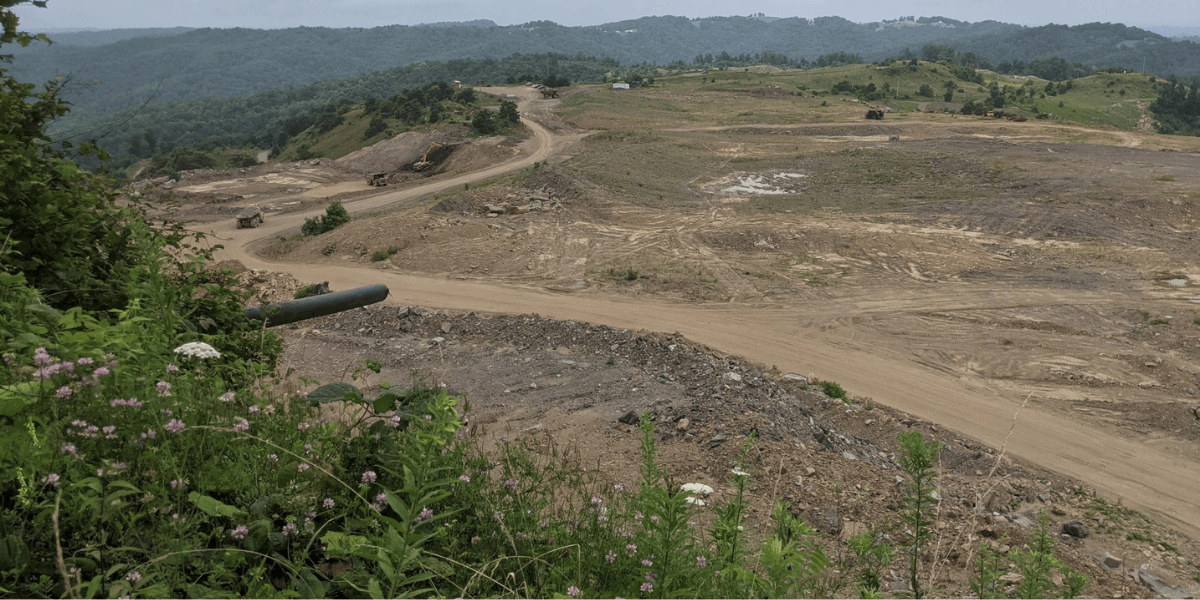
- Declining coal revenues limit the funding being raised for the Abandoned Mine Land Trust Fund, limiting resources to address legacy pollution sites. Appalachian communities know all too well the sights of open mine portals, mine waste piles (gob, boney, slag, etc.), sheer cliffs from strip mining and orange streams from acid mine drainage. And while less coal mining already means less funding available for old mine cleanup, Congress also regularly reduces the fee amount in an attempt to support coal companies and shift responsibility for mine cleanup onto taxpayers. In 2021, the Infrastructure Investment and Jobs Act provided $11 billion of taxpayer funds for abandoned mine cleanup. According to OSMRE, this is the outstanding reclamation cost for sites across the country. However, advocates suggested the figure is likely closer to $20 billion in 2020 due to inflation raising the cost of materials and labor, while the mine estimates are not updated — and these costs only continue to increase.
- Though the rate of mining has slowed down, mining companies continue to seek new permits — including permits for the incredibly destructive practices of mountaintop removal and valley fill operations — and regulators continue to grant these permits. After decades of very serious water contamination across countless communities and watersheds, continuing to grant such permits is indefensible. But in general, regulators do not account for the cumulative impacts or the past compliance of the permit applicant, and instead make their decisions based only on the claims made in the particular permit application being considered.
These issues with SMCRA are rooted in shortcomings in the law that coal companies have successfully exploited and lax enforcement by regulators. That’s why Appalachian Voices worked with 51 other organizations to craft a legislative platform that would address these issues by ensuring coal companies clean up their own messes and mining communities are protected from pollution and other risks. We continue to work with congressional leaders to introduce solutions that will help SMCRA live up to the ideals of those 200 grassroots leaders who joined President Carter in the White House Rose Garden in 1977.
What is the Trump administration doing to support coal communities?
At the same time as we work on improving SMCRA, the Trump administration is looking to expand coal mining as a false solution for Appalachian communities’ economic challenges under the political framing of a “national energy emergency.” While the administration claims to be acting in the best interests of coal communities, we have already seen many examples of the administration disregarding community and worker protections for the profit of the coal companies. So far this year, Congress and the administration have:
- Designated metallurgical coal, a mineral used in traditional methods to make steel, as a critical mineral and approved a new 2.5% tax credit for its production, all while repealing communities’ access to clean energy tax credits that were creating a new, cleaner economic vision for Appalachia. The majority of metallurgical coal currently produced in the United States is shipped overseas to countries such as India and China, proving we don’t have a domestic shortage of the material. Additionally, between U.S. tariffs and steel-making technology shifting away from using metallurgical coal altogether, current market conditions do not favor a self-sustaining industry.
- Moved to open Appalachia’s public lands to coal mining while also allowing for the use of U.S. Forest Service roads for hauling coal through the Monongahela National Forest in Southern West Virginia.
- Expedited mine permit review and moved to limit community input on the scope and impacts of energy projects, regardless of concerns about community protections.
- Eliminated positions with OSMRE that provide critical oversight of mining operations, coal company financial obligations and reclamation progress.
- Shuttered federal offices engaged in monitoring and preventing black lung disease among coal miners, a debilitating occupational hazard on the rise in Appalachia. Following intense advocacy from community members, public interest organizations and Sen. Shelley Moore Capito, R-W.Va, and Rep. Riley Moore, R-W.Va., the Department of Health and Human Services reinstated employees set for termination at the National Institutes of Occupational Safety and Health working on monitoring black lung disease in coal miners. However, much is still unknown about the future of federal research on preventing black lung disease.
- Delayed implementation of a new silica dust standard meant to protect coal miners from dying from the worst form of black lung disease caused by silica dust.
- Revoked community grants being used for economic development projects in the coalfields of Southwest Virginia.
Our communities have become resilient to efforts by D.C. politicians to sell us out for campaign contributions. While we work to improve SMCRA and defend our hard-fought victories against an administration and Congress seeking profits for their friends over good jobs in healthy communities, we continue to be inspired by our neighbors to do the hard work and show up for each other. We may be 48 years after the passage of SMCRA, but our mission to protect our mountains remains steadfast, and we will stay in the fight until we secure the future we, and generations of local advocates, know our communities deserve.