
By Luanne McGovern, West Virginia Highlands Conservancy
The past few months have been very busy in our fight against the massive Ridgeline power plant/data center project proposed by Fundamental Data in Tucker County. In conjunction with our partner organizations – Tucker United, the Sierra Club, Friends of Blackwater, West Virginia Rivers Coalition and many others – we continue to push back against this travesty in any way possible.
One of the most significant developments has been the ongoing legal challenge to the project’s air permit, which remains active in the court system.
WVHC, Tucker United and the Sierra Club appealed the Ridgeline air permit to the West Virginia Air Quality Board in September 2025, asking the board to repeal the permit. After two days of testimony and expert witness presentations, the board rejected our appeal on Feb. 5, 2026, making only one small change to the requirements for additional stack testing.
We then filed an appeal with the West Virginia Intermediate Court of Appeals and the Supreme Court of Appeals in October 2025. Fundamental Data subsequently requested that the appeal be heard by the Supreme Court, but that request was rejected on June 3, 2026. Briefs have been filed with the Intermediate Court, but no hearing date has been set.
We appreciate everyone who has contributed to our legal fund, which has allowed us to continue this fight in the courts.
Beyond the courtroom, concerns about political influence and potential conflicts of interest have continued to raise serious questions about the handling of data center legislation and related legal proceedings.
On March 16, 2026 — the day after the West Virginia Legislature ended its session — we were notified that West Virginia Speaker of the House Roger Hanshaw would be representing Fundamental Data in our Intermediate Court appeal. This is the same individual who led the passage of HB 2014 (which stripped local citizens of their rights to challenge data centers) and who ensured that proposed changes to HB 2014 did not advance in the House this year.
It was later revealed that Roger Hanshaw was also representing a data center developer in Mason County. Since these are apparent conflicts of interest, numerous groups have called for Hanshaw to resign from legal cases related to data centers, but he has refused.
We also learned that Judge Dan Greear of the Intermediate Court had Roger Hanshaw as a major supporter of his reelection campaign. Once this became public, Judge Greear requested a ruling on whether he should be recused from hearing the Fundamental Data case. However, it was too late — Judge Greear lost his reelection race to Jim Douglas and will no longer serve on the Intermediate Court.
Meanwhile, residents finally had an opportunity to hear directly from Fundamental Data representatives during a series of public events in Tucker County.
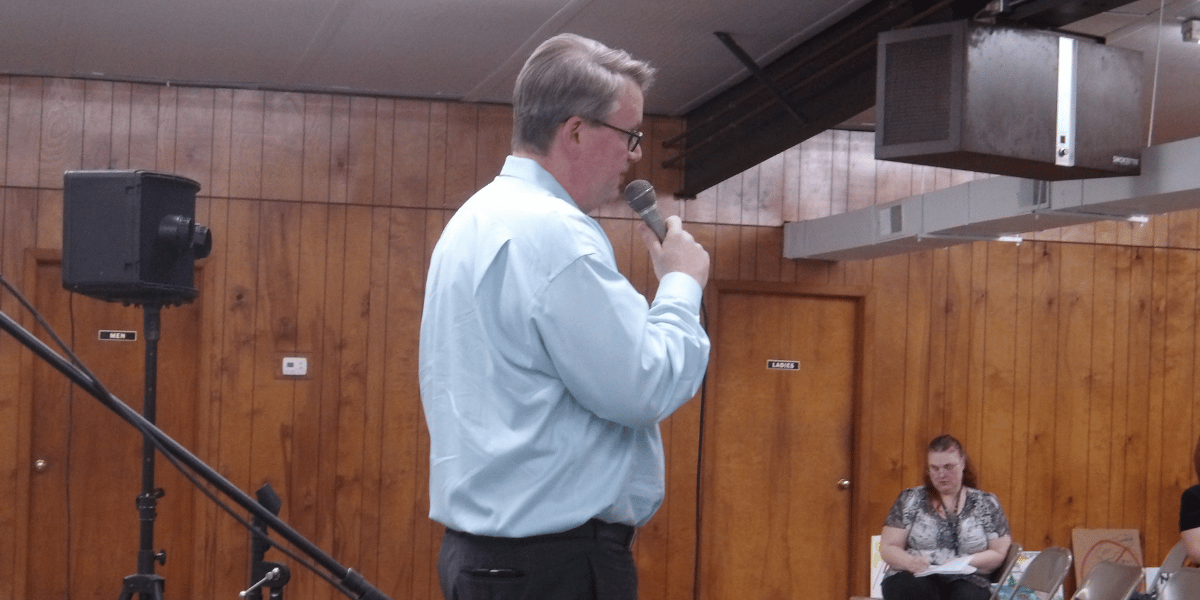
On May 16, 2026, Mayor Al Tomson hosted a town hall meeting to update citizens on the Ridgeline project. Unknown to anyone beforehand, Fundamental Data attended the town hall to answer questions — the first time company representatives had been seen in public since the project was announced more than a year earlier.
During the meeting, they delivered some bombshells: plans involving 10,000 acres across multiple sites, a second gas plant, a nuclear plant in Grant County, a massive solar installation, 1,500 acres of data centers, the use of mine water for cooling, 5,000 construction jobs and liquefied natural gas storage.
The main speakers from Fundamental Data were Scott Wyland and Lewis Reynolds. They were perceived by many attendees as arrogant and condescending. They did not offer a single way in which they wanted to be part of the community or describe any specific benefits they would bring to the area. They also dismissed claims that emissions from the plant would impact people’s health.
The following day, they participated in a “meet and greet” at Blackwater Falls State Park with the WV Department of Commerce, both mayors, the county commissioners and select local citizens. Two representatives from Tucker United were invited at the last minute and no press was allowed to attend.
The group also visited the project site.
The Ridgeline project and HB 2014 also remained key topics during recent discussions between local residents and state lawmakers.
Tucker County Sens. Randy Smith and Jay Taylor attended a legislative update in Parsons on June 2, 2026, and approximately 50 people were in attendance. According to those who attended, much of the discussion centered on HB 2014 and the Ridgeline Project.
Sen. Smith was questioned about the lack of progress on changes to HB 2014 and local control during the most recent legislative session. Country Roads News provided an update: “Opposition to Data Center Dominates WV Legislative Update.”
As legal challenges continue and new developments emerge, public involvement remains critical. We encourage you to stay informed, follow Tucker United and the West Virginia Highlands Conservancy, share updates with friends and neighbors and continue asking questions about decisions that will shape the future of Tucker County.
This effort has always been driven by people who care deeply about their communities, their public lands, and the places they call home. Whether by attending meetings, speaking with elected officials, supporting local organizations or simply helping spread the word, every action makes a difference.
If you are able, please consider becoming a member of the West Virginia Highlands Conservancy. Memberships start at just $15 per year and your support helps provide the resources to continue protecting West Virginia’s lands, waters and communities.
The challenges ahead are significant, but so is the commitment of the people working to