
By Luanne McGovern, West Virginia Highlands Conservancy
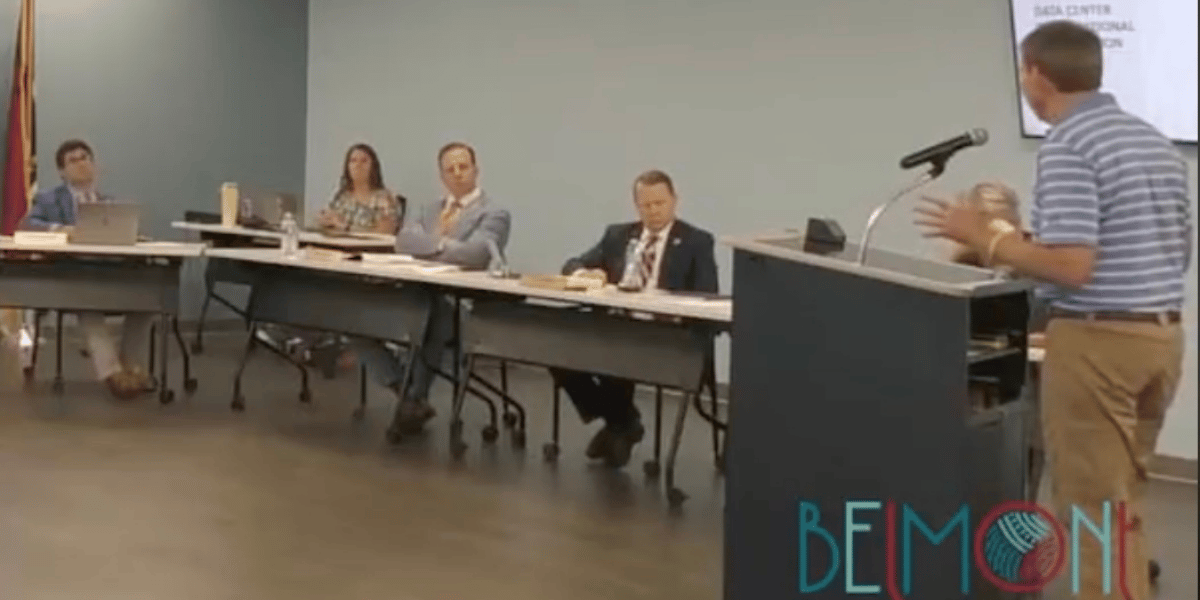
City council brouhaha in Belmont, North Carolina
Ted McGavran is an engineer working for Fundamental Data. He has been seen around the project for many months, showing up at the Air Quality Board hearings in Charleston in December 2025, and online at the May 16 Davis Town Hall. He also appears to be a member of the Environmental Sustainability Board for the city of Belmont, North Carolina, where he appeared before the City Council on July 6, 2026. At the meeting (recorded and distributed on YouTube), McGavran made numerous statements about the Ridgeline project, West Virginia and HB 2014. A few notable quotes include:
“We were the guys that basically wrote the bill [HB 2014] and basically got it through the legislature in 2024 and 2025 … and that gave us the opportunity to set out rules for … a microgrid.”
“We can do pretty much whatever we want to do up there.”
“It’s the middle of nowhere.”
When this information was reported by Country Roads News, the backlash was immediate. From Governor Morrisey’s spokesperson Lars Dalseide, in a statement: “HB 2014 was the Governor’s bill, and the drafting was deliberately limited to the Governor’s office to ensure the legislation reflected Governor Morrisey’s vision and priorities.”
And from the governor himself on X: “This so-called representative is fabricating this story – he should be ashamed of himself. No respectable company would allow someone who represents them to mislead the media and the public like this. I’ve been worried about how this company has handled itself from the beginning. They need to be much better. Shame on them.”
Fundamental Data also issued a statement that “Fundamental Data did not draft, write or play any role in drafting HB 2014. Mr. McGavran is not authorized to speak on behalf of the company.” One wonders if Ted is now looking for a new job.
Does Fundamental Data actually own the land?
On July 16, a letter on behalf of Tucker United, West Virginia Highlands Conservancy, Friends of Blackwater and the Sierra Club was sent to the West Virginia Department of Environmental Protection, requesting clarification on whether Fundamental Data actually owns or controls the land for the Ridgeline project. The permit application states that “Fundamental Data LLC has an executed purchase and sale agreement signed by both the seller and purchaser on July 19, 2024.” But no public record can be found of this agreement, and the West Virginia DEP did not respond previously to comments on this land ownership issue. If Fundamental Data presented false information in its application, the air permit should be suspended or revoked.
Initially, the West Virginia DEP responded in a media statement that “West Virginia air permitting laws do not require an applicant to own the property to apply for an air permit.” But on July 31, the West Virginia DEP did an about-face and sent a letter to Fundamental Data requesting proof of ownership and control status. “The Division of Air Quality issued the permit based on that information and the certification of truth, accuracy, and completeness provided in the application,” wrote Director Laura Crowder. A response was required by Aug. 7.
Other news!
During a public meeting on Aug. 4, Governor Morrisey brought up Tucker County and Fundamental Data. “Let me tell you, Tucker County was the wrong way. I’m not afraid to tell you that. These guys got out in front, and they didn’t do it the right way. They didn’t engage the community. I want to make sure that happens, right? Because that’s what people deserve.”
There are two appeals of the Ridgeline air permit pending before the Intermediate Court of Appeals, with no scheduled hearing dates. Appeal 25-ICA-391 was filed by local attorney Brent Eason and questions the large amount of redacted and confidential information in the permit application. Appeal 26-ICA-92 was filed by Appalachian Mountain Advocates and requests that the decision made by the Air Quality Board to uphold the permit be rescinded. Two of the ICA judges have been recused from the cases, and Judge Greer was defeated in the recent election.
During the panel session in Davis on June 15, Chris Morris, director of the West Virginia Data Economy Office, committed to establishing a citizen advisory council on data center policy within 60 days (by Aug. 15). The panel will include people from industry, environmental advocates, academia and utilities. We will be holding him to that commitment.