Go North Alliance Newsletter
There are two large-scale projects hanging over our heads right now here on our mountaintop in Tucker County — projects that will have enormous impacts on our environment, quality of life and economy.
One, the 10-mile stretch of Corridor H between Parsons and Davis, has been delayed for reasons unknown to us. But we have received word that the issue date for the Draft Supplemental Environmental Impact Statement is now set for August 2026.
Secondly, in April, we were stunned to read in the Parsons Advocate about an air quality permit submitted by an unfamiliar, elusive entity called Fundamental Data for a natural gas-fired power plant to be located between Thomas and Davis. A heavily redacted draft permit caused immediate alarm and a strong public reaction. Groups formed, research began, public meetings were held, comment letters were written, and yard signs were planted. Now, we wait for the West Virginia Department of Environmental Protection’s decision on this permit. The DEP announced a 30-day extension due to the large number— 1,600—of public comments submitted.
It cannot be ignored that both of these proposed projects— a four-lane highway possibly cutting through our towns and a gas-fired powered plant within minutes of our homes and school—will take a toll on our lives: our environment, the air we breathe and our health.
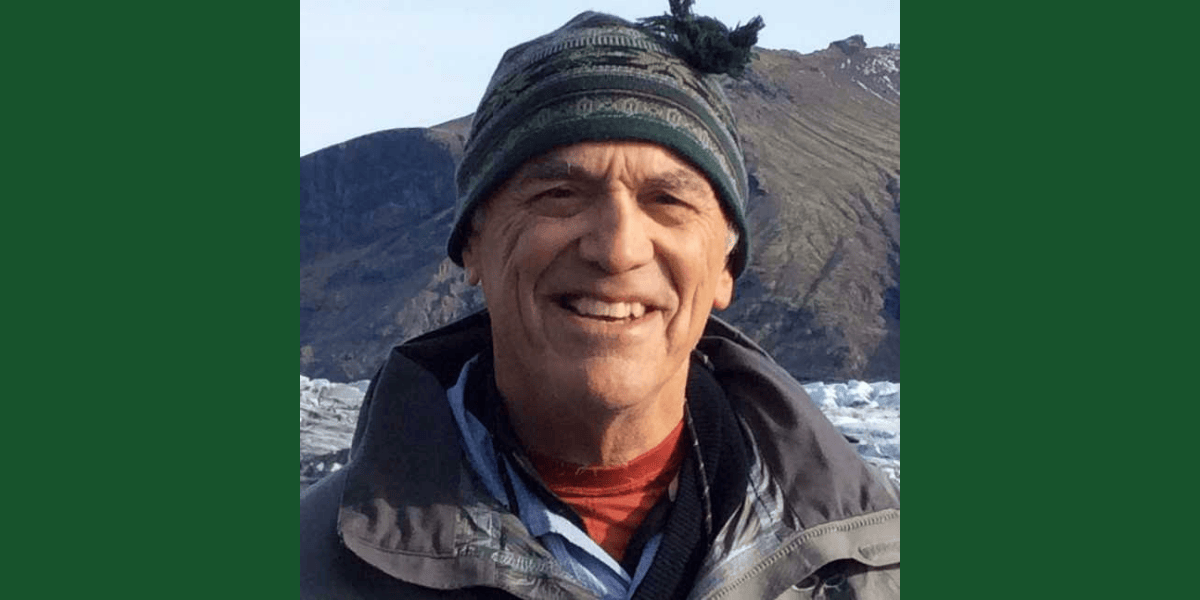
So, as we play the waiting game, we at Go North decided to focus this month’s newsletter on a subject that is not very popular with either our own governor here in West Virginia, nor our president in Washington, D.C.: climate change and the environment. We begin at the beginning, featuring an interview with Go North Alliance member Rafe Pomerance, an internationally-known environmentalist and Pendleton County resident.
Almost 50 years ago, while doing research, Rafe stumbled across a statement that stunned him and set him on a path to bring the issue of climate change to the attention of Congress, the President of the United States, and the media.
Here is Rafe’s story of how it all began:
It was 1977, and Rafe had been working on issues involving the Clean Air Act for the past four years. Finishing up the amendments to the act, he turned his attention to acid rain. While researching, he ran across a few paragraphs in an EPA environmental report that blew his mind:
“… carbon dioxide emissions from coal use and other fossil fuels or carbon based fuels, oil and gas, would warm up the earth. And that the concentration of carbon dioxide would continue to increase and the earth would get hotter.”
“I was so shocked by this. I had never heard of this,” Rafe said. “I had been working on the Clean Air Act since 1973 and this was 1977. The issue had never come up in Congress that the climate would warm up from the emissions of greenhouse gases, and it was really a shock. I decided to work on the problem at that point.”
A few days later, through what he calls synchronicity, Rafe stumbled across an article by Gordon MacDonald, a renowned geophysicist then working in Washington as a senior research analyst. Rafe contacted him immediately and arranged a meeting.
Mr. McDonald gave Rafe a long briefing on the science of it all, and Rafe describes what happened next. “I said to Gordon MacDonald, if I set up the briefings on this, will you do them? I was a lobbyist and I knew how to do that. And he said sure, he was eager to do that. So I said I would start setting up meetings with people inside the administration, on Capitol Hill, members of Congress and the media.”
What astonished Rafe most was how little awareness there was.
“Nobody knew anything about climate change at that point. I mean there were some pockets of the scientific community that were working on it and occasionally as it turns out reports would come out of the executive branch. But they didn’t go anywhere. Nobody followed up. There was no organizational effort. So that was sort of the ingredient that I provided, along with my colleagues, to take the science, the substance of it, and take it to policy makers to make it an issue. So that was the first phase and that started in 1979 … that’s how long ago it was …almost 50 years ago.”
The full story of this 10-year period in history, featuring Rafe Pomerance, appeared in the New York Times Magazine on August 1, 2018: Losing Earth: The Decade We Almost Stopped Climate Change, written by Nathaniel Rich with support from the Pulitzer Center. It’s a must read.
Taken from the Prologue of that article are these words:
That we came so close, as a civilization, to breaking our suicide pact with fossil fuels can be credited to the efforts of a handful of people, among them a hyperkinetic lobbyist and a guileless atmospheric physicist who, at great personal cost, tried to warn humanity of what was coming. They risked their careers in a painful, escalating campaign to solve the problem, first in scientific reports, later through conventional avenues of political persuasion and finally with a strategy of public shaming. Their efforts were shrewd, passionate, robust. And they failed. What follows is their story, and ours.
We continue our story of climate change based on our interview with Rafe Pomerance.
It was almost 50 years ago, when Rafe Pomerance, sometimes called “the original climate change warrior,” stumbled across an EPA environmental report stating that carbon dioxide emissions from coal use and other fossil fuels would warm up the earth, and the earth would continue to grow hotter.
“I was shocked. I said to myself, “This can’t happen! This can’t be true.” That bit of knowledge was the catalyst for Rafe’s life’s work fighting tirelessly to make others aware of the damaging effects of climate change. The science was known, but he was stunned to find out that there was no awareness in the political circles of Washington DC where he had been working.
By the late 70s, when Rafe and Gordon MacDonald began their “carbon dioxide roadshow,” there was really nobody out there who was connecting the science of climate change to policy. Gordon was a scientist, but he understood the bridge between science and policy. Together, they made headway into the corridors of the Capitol, and worked to put climate change on the agenda.
The two men had basically reached the top of the federal hierarchy with their briefings when they found themselves on the grounds of the White House, in the old Executive Office Building. This briefing was with President Carter’s top science advisor at that time, Frank Press. Things were about to change.
As Rafe put it, “Frank Press trotted out his entire senior staff for Gordon’s briefing because Gordon MacDonald was a very famous geophysicist!” This time Rafe let Gordon do all the talking. He watched as the president’s advisers asked questions. When it was over, Rafe was left wondering if they really got it.
They did… the big report of 1979 was the Charney Report, considered a milestone in the history of understanding climate change.
As Rafe describes it, Frank Press took up the issue.“He calls Jule Charney, a famous climatologist and says, ‘I want an assessment of the climate change issue.’ Press asked Charney to convene a National Academy panel, which he did, gathering scientists to decide whether the White House should take Gordon’s predictions of climate change seriously. Their conclusion would be delivered to the president.” Rafe felt “If Charney’s group confirmed that the world was careening toward an existential crisis, the president would be forced to act.”
Rafe continues: “The remarkable thing about the Charney Report is that the fundamentals have not changed much: that increasing concentrations in greenhouse gases would warm the atmosphere and result in all kinds of consequences. And one famous line in the Charney Report was that the doubling of carbon dioxide would result in a global average increase of three degrees centigrade plus or minus a degree and a half.” Rafe added, “I remember this stuff very well because it was such a big deal!”
Of equal importance was a meeting that MacDonald and Rafe had with Gus Speth, then chairman of the White House Council on Environmental Quality. Speth asked for a report on the climate change problem which MacDonald and three of his colleagues, scientists George Woodwell, David Keeling and Roger Revelle, delivered in short order. The report had a huge effect on Speth: “Its contents were alarming,” Mr. Speth wrote in his 2004 book, Red Sky at Morning. “The report predicted ‘a warming that will probably be conspicuous within the next 20 years,’ and it called for early action.” Speth became a major climate advocate throughout many decades.
One of Rafe’s greatest assets during this time was his ability to organize and set up witnesses for breakthrough hearings on climate change. He went to New York City to meet with Jim Hansen, who may be the most famous climate scientist there is.
Said Rafe of Hansen, “I had never met him. He was the head of the Goddard Institute for Space Studies at that time. Lovely man, very generous with his time. He walked me through the whole thing. And I asked him, ‘Are you willing to be a congressional witness?’ And he sort of nodded, and said yes. For the next several years we tried to use opportunities available to bring Hanson forward as a witness. And I was involved. He became a famous congressional witness.”
One of those hearings was on June 10 and 11, 1986 on the subject of Ozone Depletion, the Greenhouse Effect, and Climate Change. Rafe offered “I could tell you all kinds of stories about how we put this hearing together, but that’s another lengthy conversation. But we got the hearing. Hansen, at the opening panel of the hearing, was amazing. He was a star witness. That panel really blew things up. It got front page coverage in The New York Times and The Washington Post. I consider that the breakthrough moment. And on my bookshelf here, I have the whole transcript of the hearing report. I’ll keep it …”
Another important hearing was in 1988. As Rafe describes, “It was a very hot summer. We had gotten Tim Worth involved in the issue, and he walks out of this briefing on the climate change issue by the Stockholm Environmental Institute and declares that he’s going to do a hearing. So I suggested to David Harwood, key staff person, ‘Why don’t you call Jim Hansen?’ So Harwood calls up Hansen and he calls me back and says, ‘You know what Hansen is going to say… he’s going to say that the temperature record of the earth now exceeds natural variability and it’s a clear climate change signal.’ That hearing made huge headlines around the world.”
We hate to stop here, but it’s impossible to cover the full history of climate change and Rafe’s ongoing contributions in our brief monthly newsletter. So we encourage you to keep reading, because it’s an important story. Below are some great sources for diving deeper into this important topic and Rafe’s involvement through the years.
Rafe hasn’t slowed down. As he describes, “I have a project. I’m working with colleagues to introduce a concept to the global process to establish an upper limit to sea level rise. Now one of the impacts of climate change, through the melting of glaciers and the heating of the ocean, is to raise sea level and hat’s happening, and it’s accelerating, and it’s predicted to accelerate even more. And so our project calls for the establishment of an upper limit which we define as the lowest possible rate of sea level rise. It’s not possible to stop sea level rise because of past warming, but it is possible to slow it significantly.”
In another interview, Rafe was asked if he had hope for the future. He answered: “What gives me hope? The emergence of young people, if they get organized, is really, really, really important. They have a legitimate stake in this, more so than baby boomers like me. And the progress we’re making on some technologies gives me hope. Also hopeful is the number of people involved in the issue. When I started, nobody had heard of the problem. Nobody was active. When I went around with Gordon MacDonald briefing people at high levels in the Carter administration, they had never heard of climate change. We started at zero. Well, look at us now. Everybody in the world knows about climate change. So is that progress? Let’s hope.”